

An organ sound full of harmony
Urk (NL)
Ichthuskerk
Boogaard 2013, IIIP/44
Information
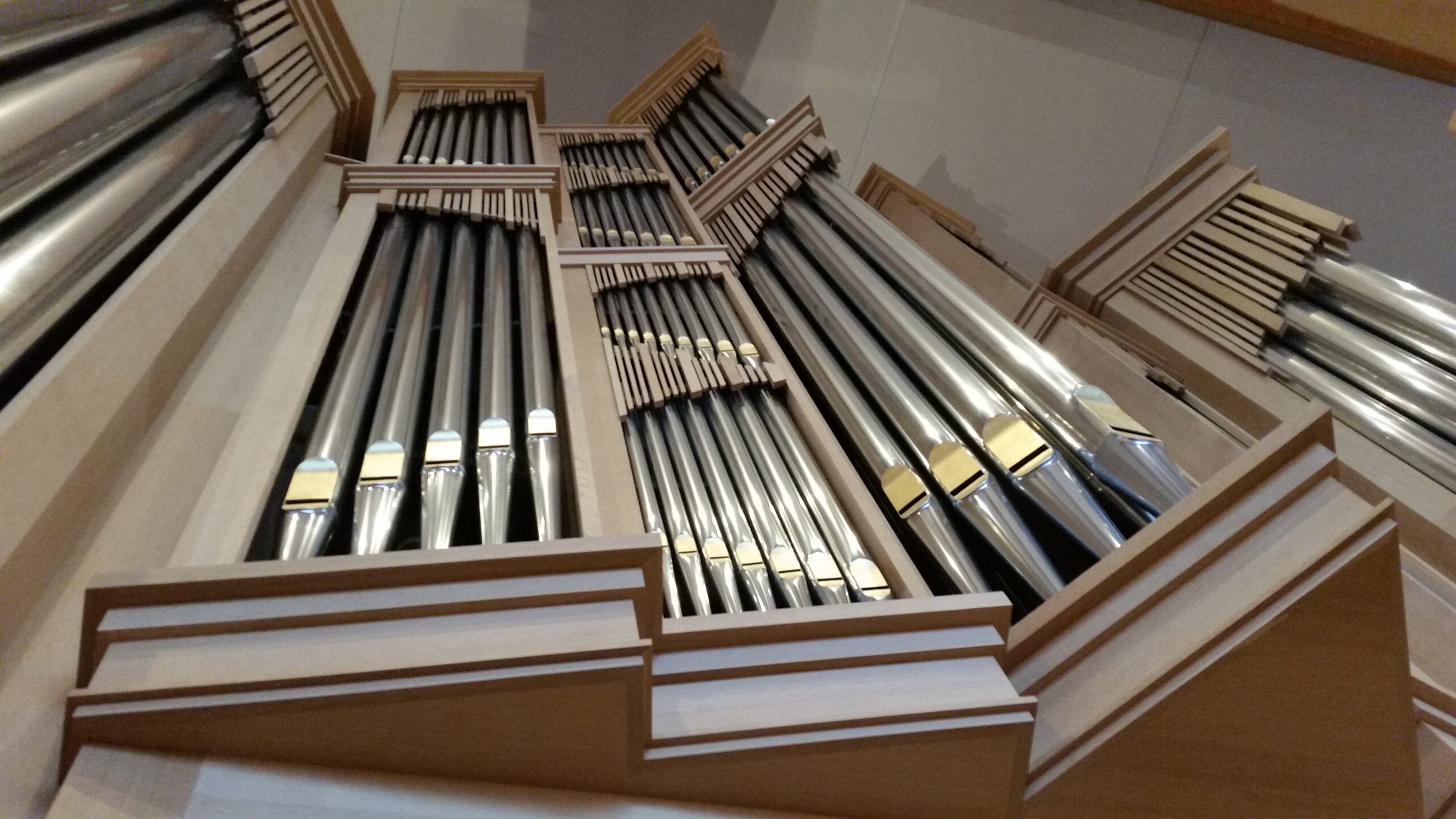
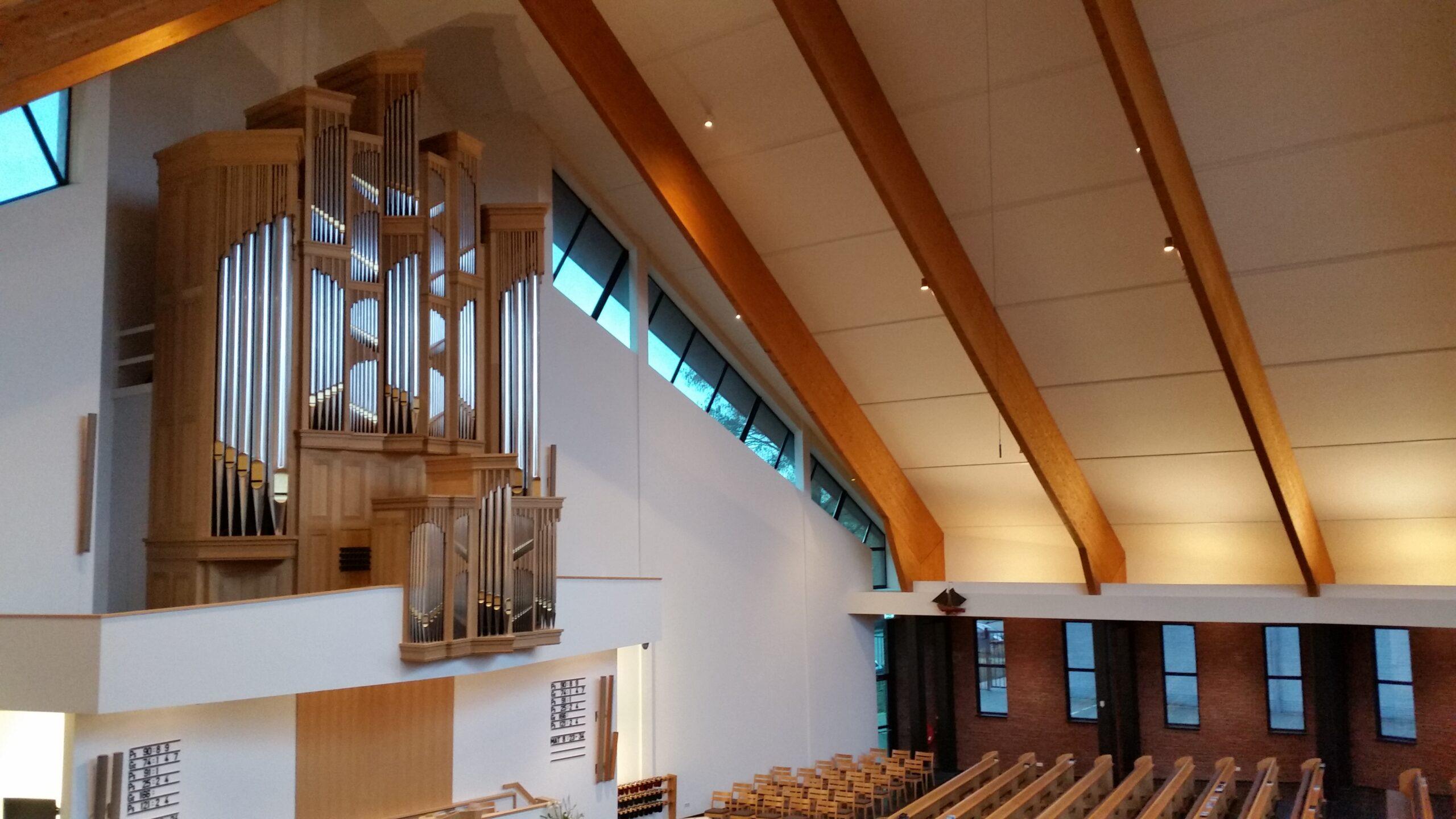
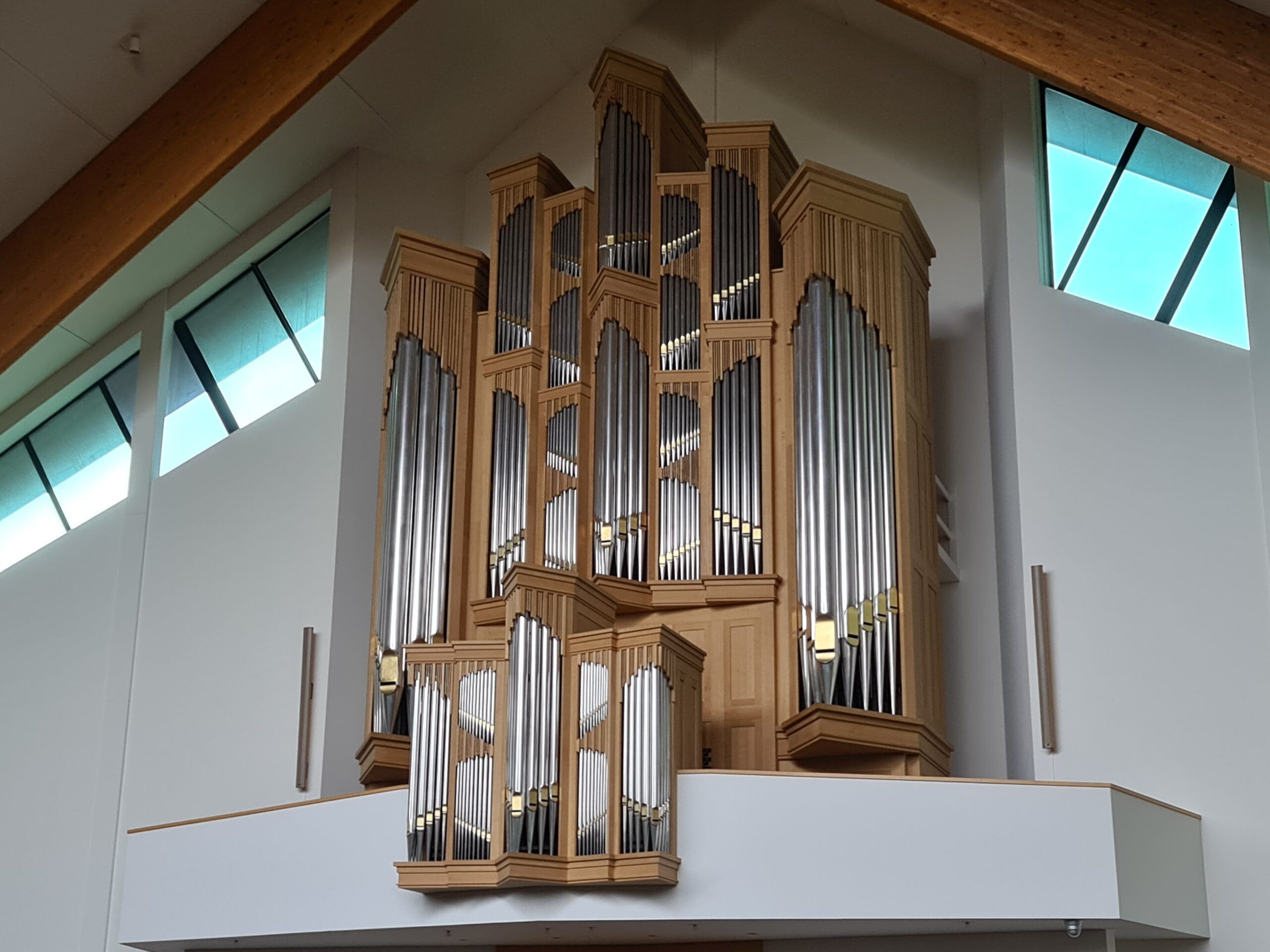
The organ of the CGK Ichthus in Urk was built largely using material from the former Kleuker organ of the St. Johannis Church in Hanover. The pipework of the Detlev Kleuker organ had wide scaling, offering many possibilities for shaping a new tonal character. The layout of the current instrument is broad and constructed with modern materials. Apart from the pipework and windchests, none of the old materials were reused.
The commission for the new three-manual organ was awarded to organ builder Ide Boogaard from Rijssen, with Stef Tuinstra acting as consultant. Together with the organ committee, they began work on the realization of a beautiful new instrument.
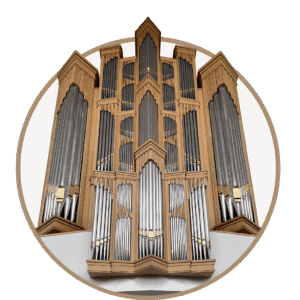
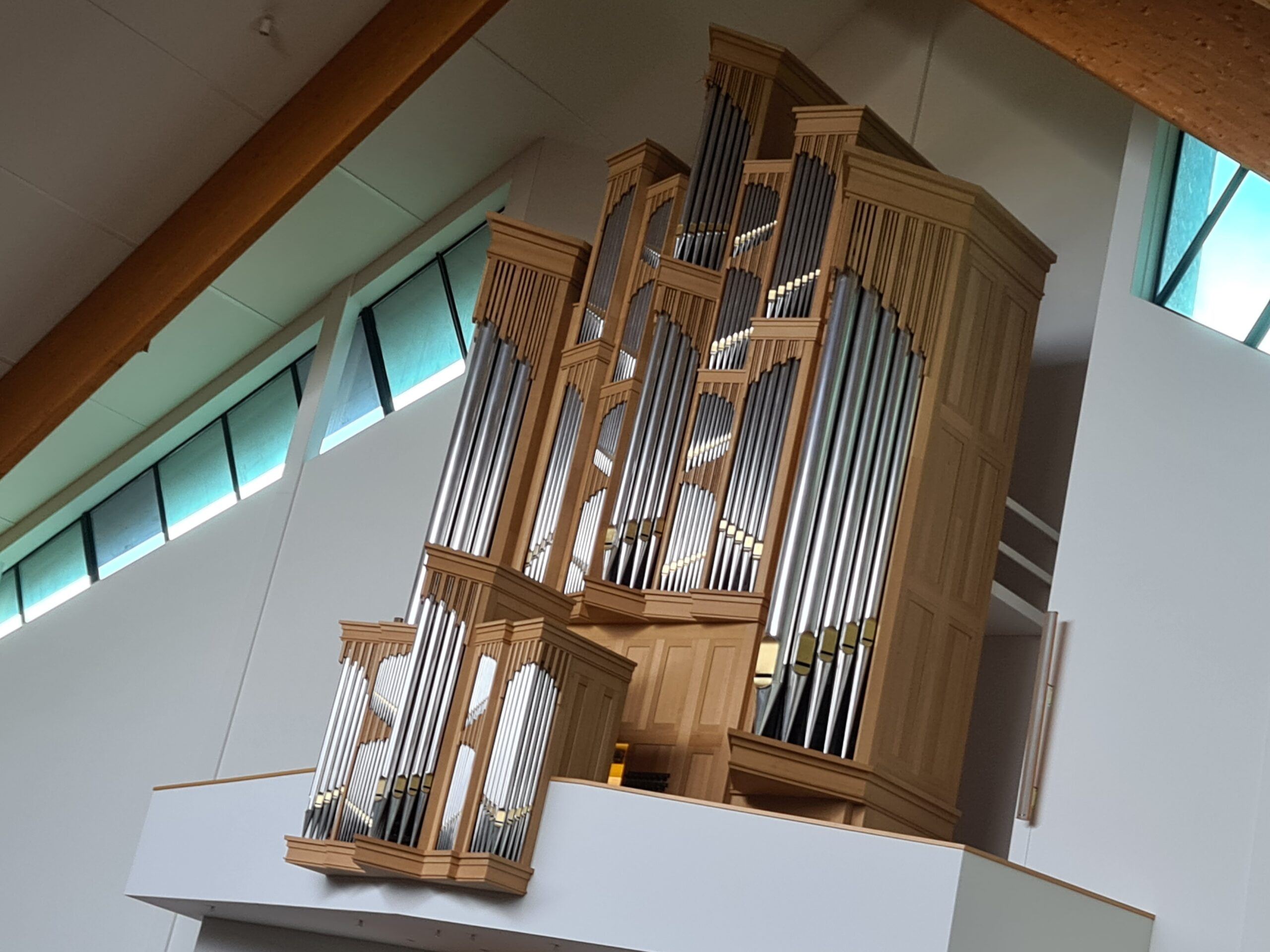
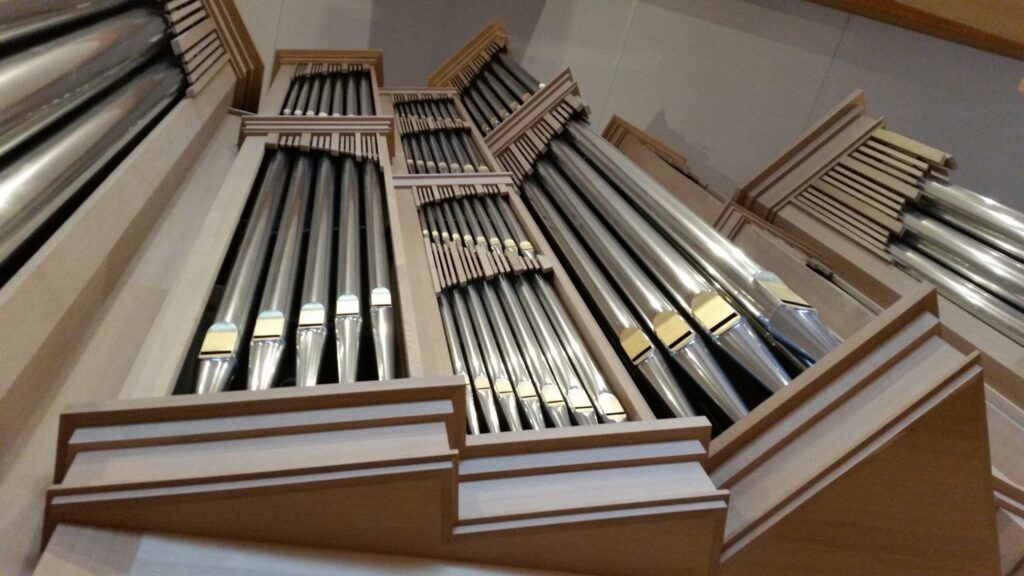
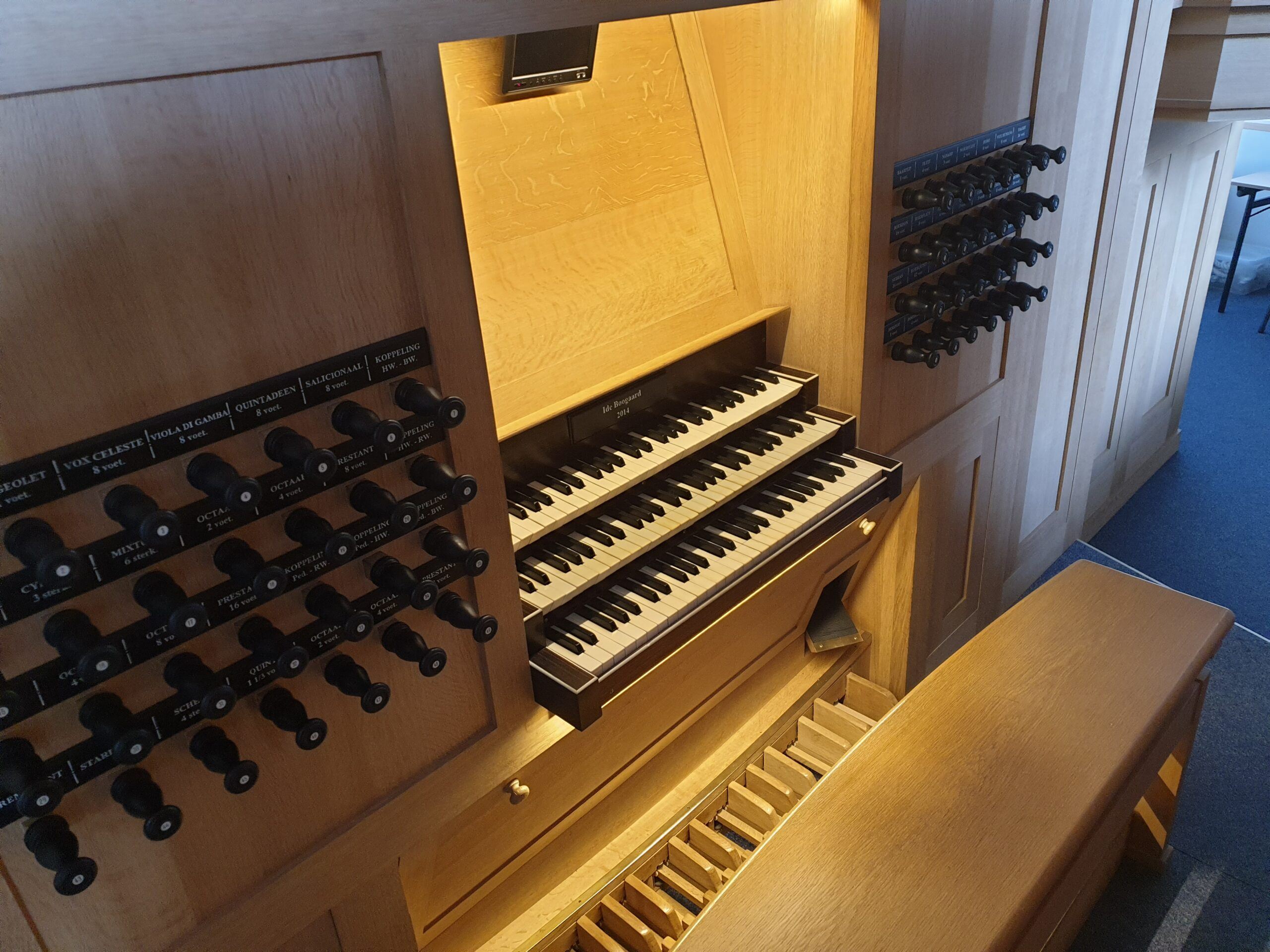
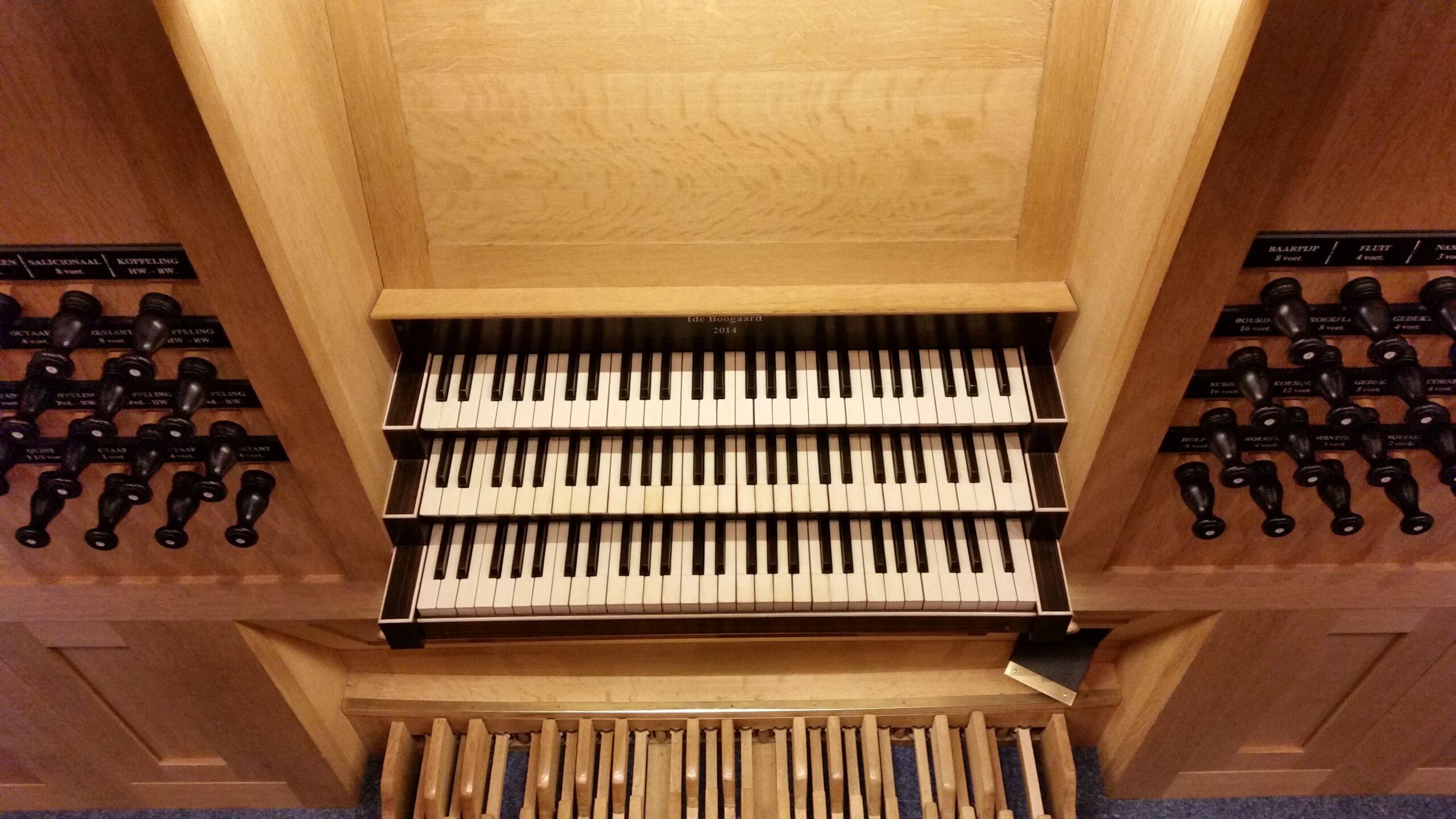
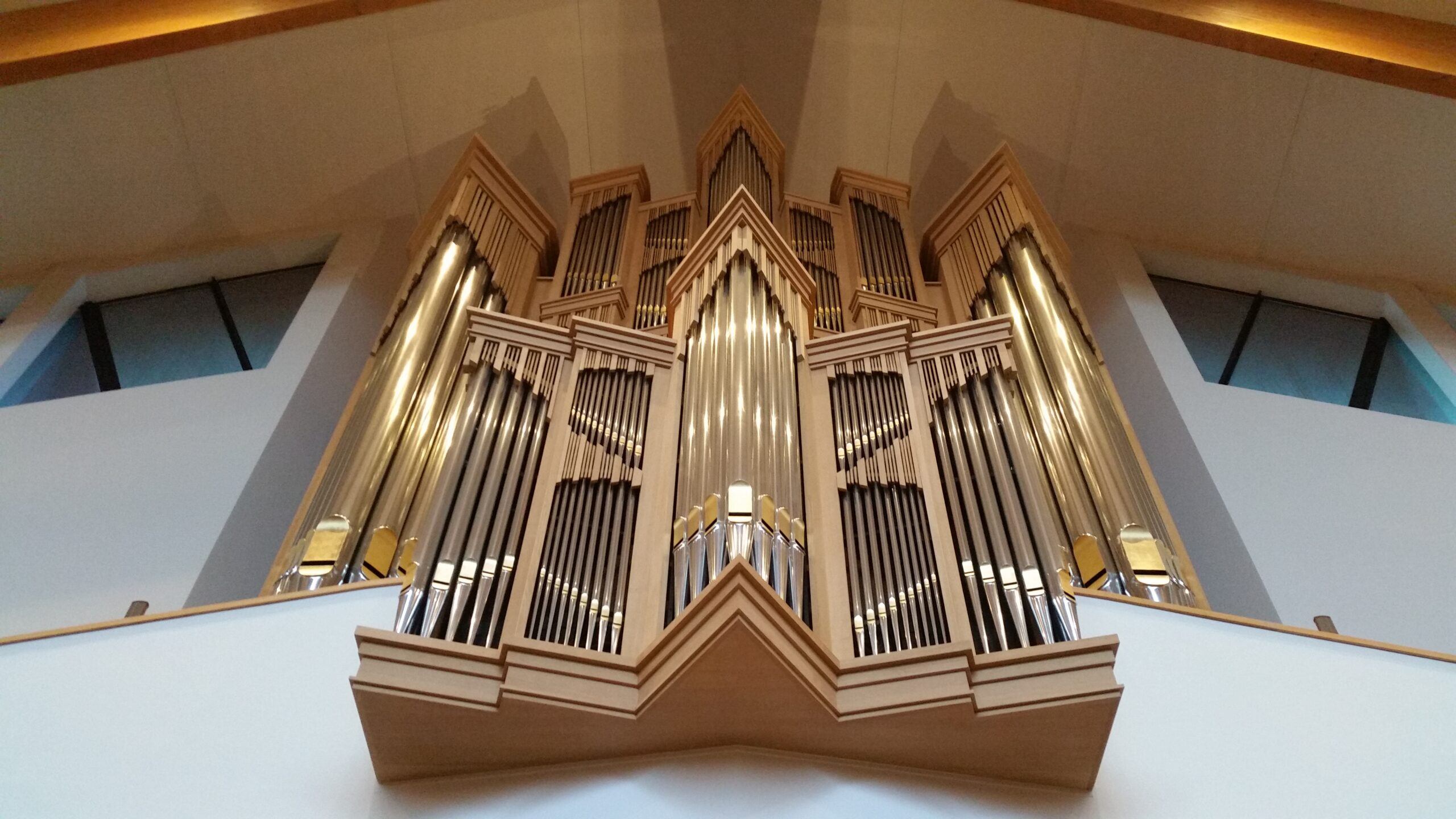
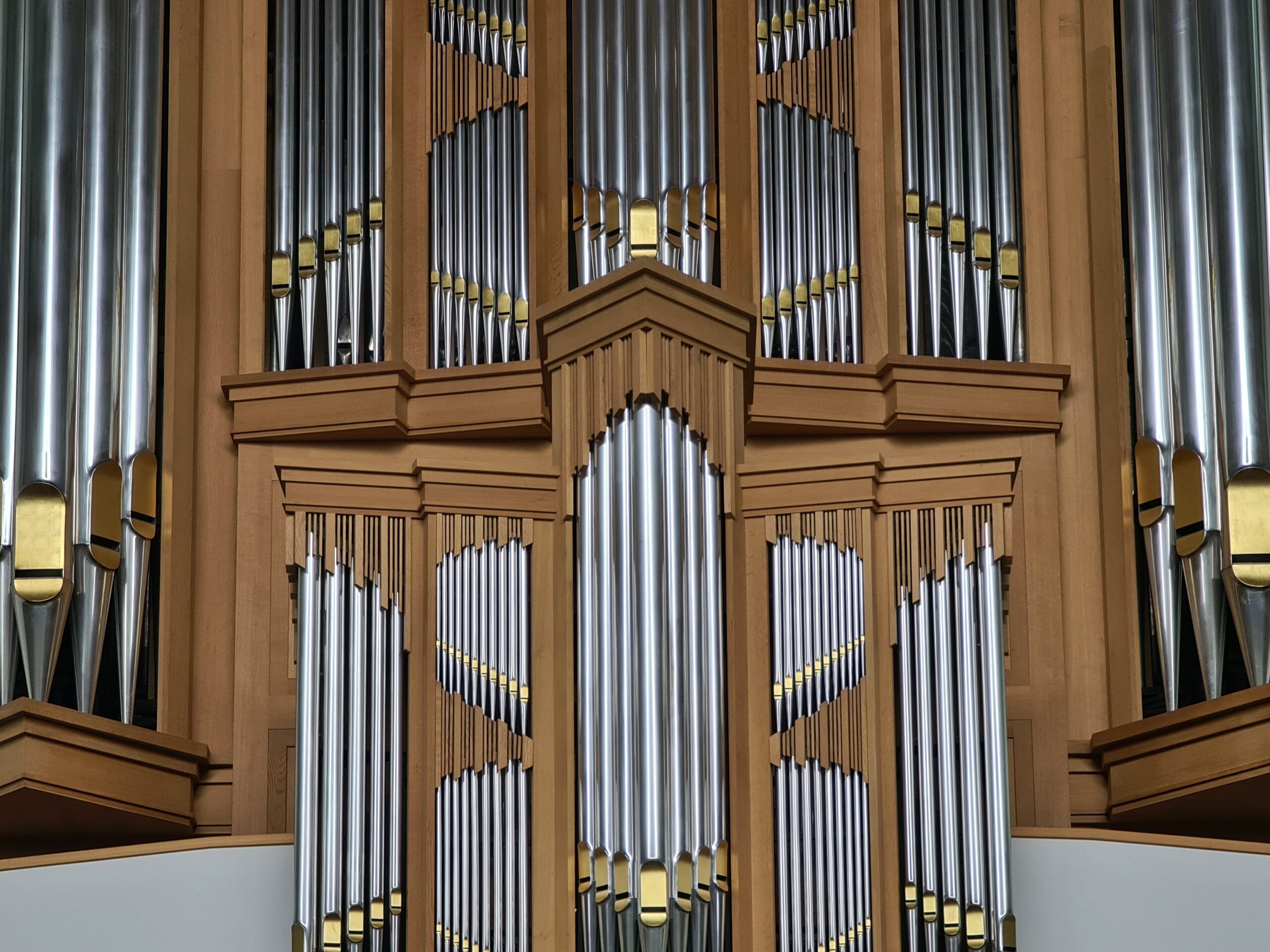
A new concept was developed, featuring three manuals (Hoofdwerk, Rugwerk, and Bovenwerk enclosed in a swell box) and Pedal, all housed in a new organ case with newly made front pipes. The design of the façade aligns with previous organs built by Boogaard in Geldermalsen (2004/2005) and Scherpenzeel (2013).
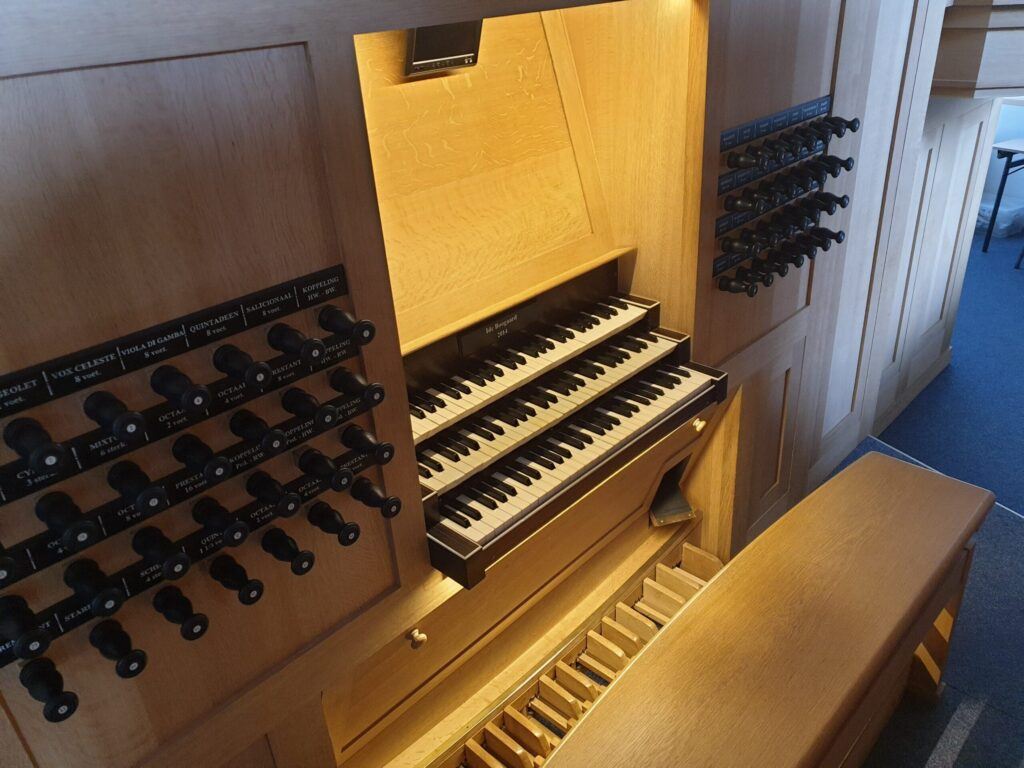
From the Kleuker organ, the pipework, the Hoofdwerk windchest, and the swell windchests were reused. New C and C-sharp windchests were made for the Pedal division. The Rugwerk windchest came from the former Van Leeuwen organ (1953/1956) of the Grote Kerk in Vianen, as did the three-manual keyboard assembly.
To expand the specification, several new stops were added, while others came from the organ builder’s own stock. The front pipework was entirely newly made. For the Hoofdwerk, new 16′ and 8′ Trumpets were built. The two original Kleuker reeds from the Hauptwerk were repurposed: one became a 16′ Fagotto on the Bovenwerk, the other an 8′ Schalmei on the Rugwerk. To balance the increased reed presence in the manuals, the Pedal reeds were fitted with wider shallots. The Hoofdwerk was also equipped with a new Cornet V discant.
Initially, the tonal concept was based on the Bätz organ of the Evangelical Lutheran Church in The Hague. As the project progressed, however, it became clear that the tonal world of Hinsz — particularly his organs in Kampen and Bolsward — was a better match for the pipework’s scaling. This led Ide Boogaard to thoroughly revise the voicing. For the Bovenwerk, a more romantic atmosphere was pursued through the inclusion of string stops and an enclosed swell box.
Source: ichthus-urk.nl
Rugwerk (C-g”’)
- Prestant 8′
- Holpijp 8′
- Octaaf 4′
- Roerfluit 4′
- Quintfluit 3′
- Octaaf 2′
- Quint 1 1/2′
- Tertiaan II st
- Scherp IV sterk
- Dulciaan 16′
- Schalmei 8′
- Tremulant
Hoofdwerk (C-g”’)
- Bourdon 16′
- Prestant 8′
- Roerfluit 8′
- Octaaf 4′
- Gedekt 4′
- Quint 3′
- Octaaf 2′
- Cornet V st
- Mixtuur VI st
- Scherp III st
- Trompet 16′
- Trompet 8′
- Tremulant
- RW - HW
- ZW - HW
Zwelwerk (C-g”’)
- Salicionaal 8′
- Baarpijp 8’
- Quintadeen 8′
- Viola di Gamba 8′
- Vox Celeste 8′
- Fluit 4′
- Nasard 3′
- Woudfluit 2′
- Flageolet 1′
- Fagot 16′
- Hobo 8′
- Vox Humana 8′
- Tremulant
Pedaal (C-f’)
- Prestant 16′
- Subbas 16′
- Roerquint 12′
- Octaaf 8′
- Gedekt 8′
- Octaaf 4′
- Bazuin 16’
- Trompet 8′
- Cornet 4′
- HW - Ped
- RW - Ped
- ZW - Ped