

Magnificent Müller
Leeuwarden (NL)
Jacobijnerkerk
Müller 1727, IIIP/38


Information
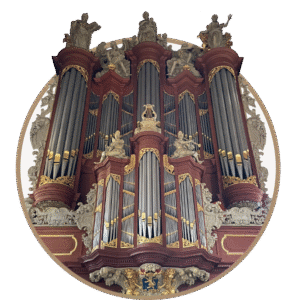
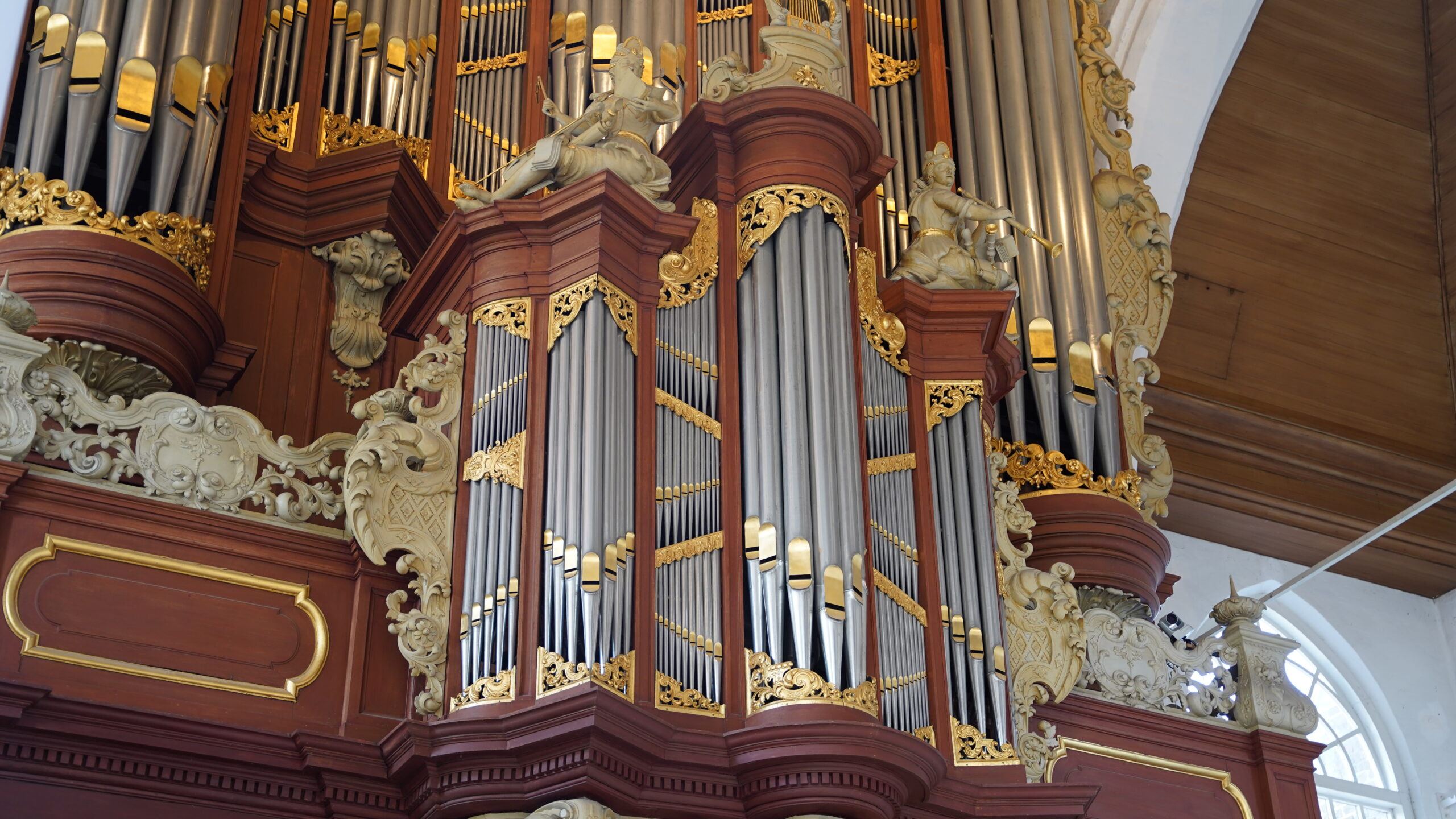
Undoubtedly the most important interior feature of the Grote Kerk in Leeuwarden is the organ, which has filled the entire west wall of the church since 1727. On March 19 of that year, the newly built instrument was inspected on behalf of the city council by several accomplished organists. On March 25, they submitted a highly favorable report — the beginning of the organ’s fame, which endures to this day.
The current organ was built between 1724 and 1727 by Christian Müller, an Amsterdam-based organ builder originally from the Harz region in Germany. On June 2, 1724, the church organist Rynoldus Popma van Oevering was instructed by the city to “make thorough inquiries in Holland regarding the latest types and models of organs, the finest masters to build them, and their prices.”
In Amsterdam, Popma van Oevering came into contact with Christian Müller, who was already gaining a reputation. On July 21, Müller traveled to Leeuwarden to negotiate with the committee appointed by the city council. He brought with him a drawing of the proposed organ, and by July 28, the contract was signed. The organ would feature three manuals and a full pedalboard, comprising a total of 37 stops. Müller was also tasked with restoring the old organ and relocating it to the Westerkerk. For all this work, he was to receive 9,000 guilders.
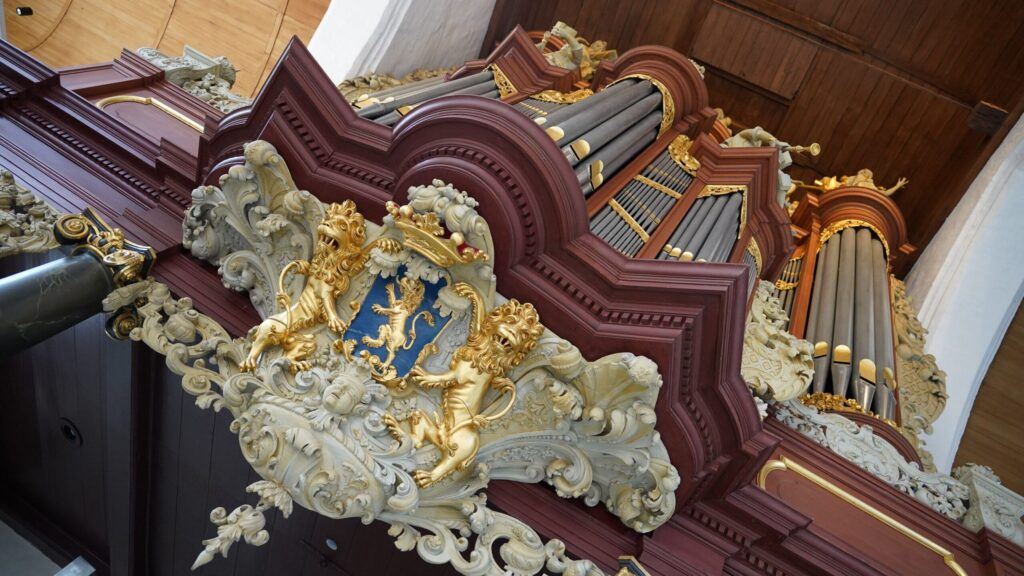
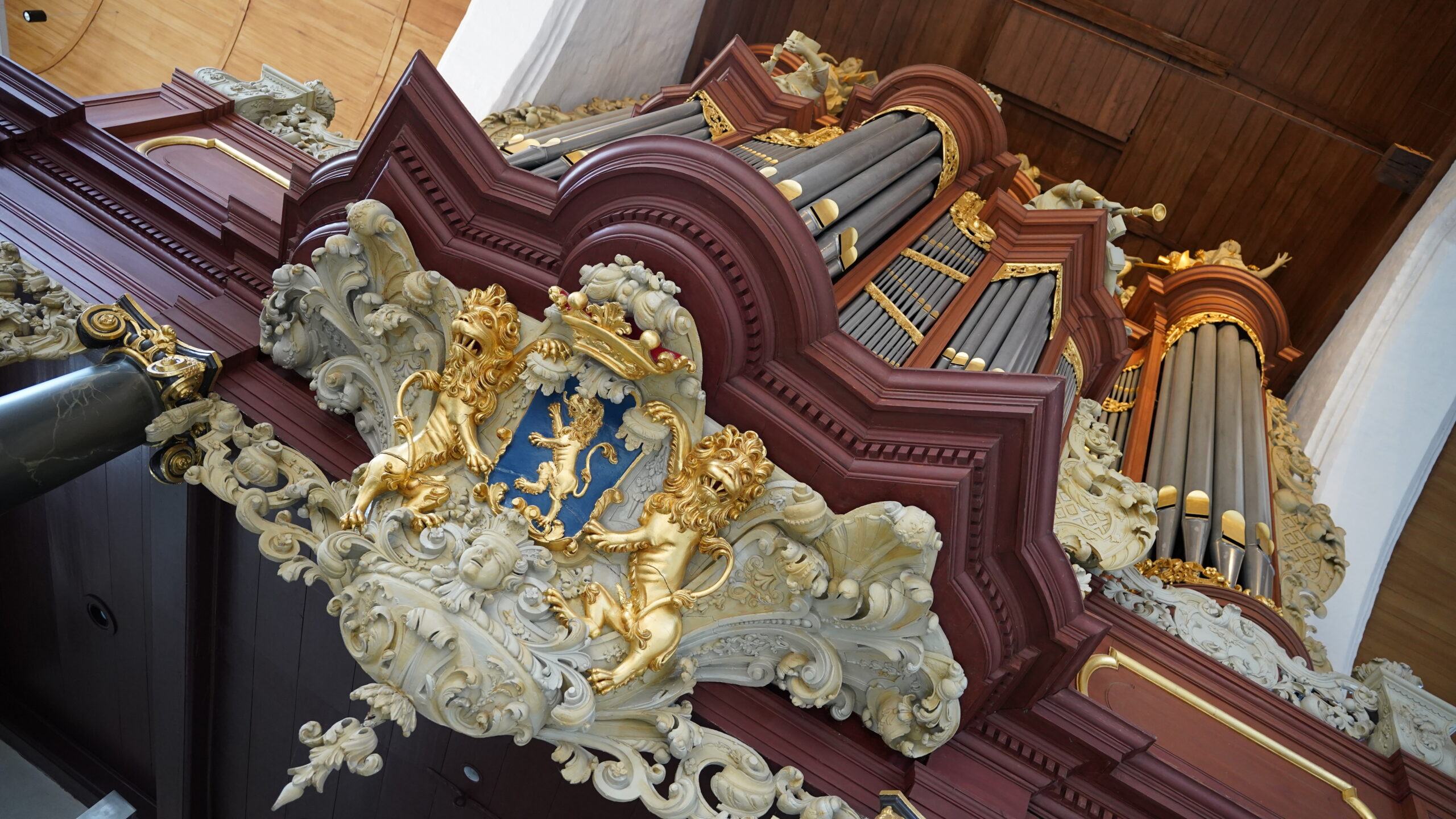
From the nave, one can see 230 front pipes, but inside the instrument there are around 2,252 additional pipes, ranging in size from just a few millimeters to over five meters. Atop the organ case stand three life-sized figures representing Faith, Hope, and Charity, flanked by two trumpet-blowing angels. The sculptures were created by Gerbrand van der Haven, while the smaller figures on the Rugpositief (positiv division) were carved by Jacob Sydses Bruinsma. A few years later, Bruinsma also created the elaborate woodcarving beneath the organ, which includes the coat of arms of the city.
Naturally, the organ underwent various alterations over the centuries to suit changing musical tastes. However, during the previous church restoration (1972–1976), the instrument was restored to its original state by the Leeuwarden-based firm Bakker & Timmenga. The organ case also regained its original color — Venetian red — after having been painted green in the 19th century and later brown.
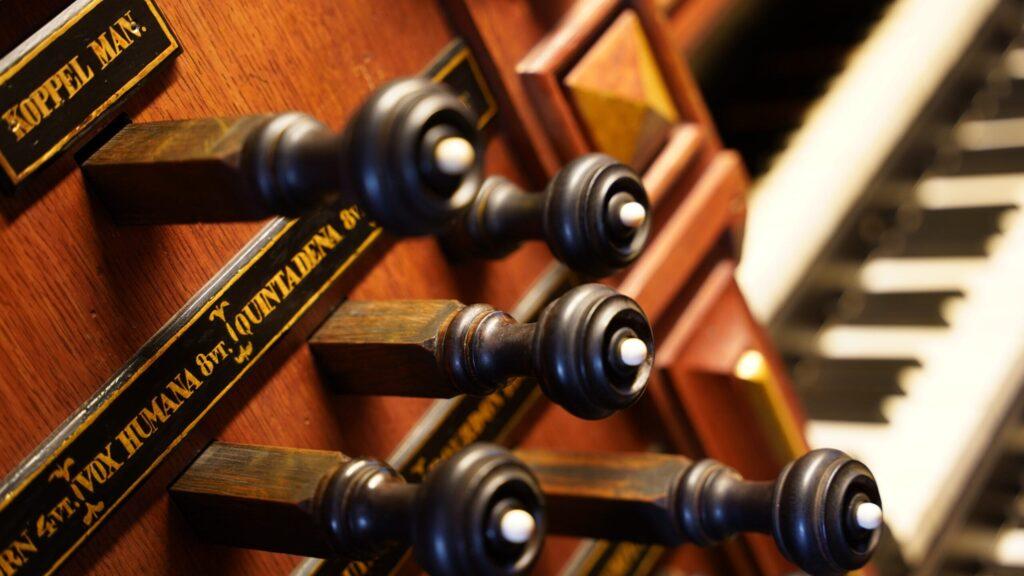
In the autumn of 2002, the organ was cleaned, repaired, and tuned. A new tremulant was installed for the Oberwerk, and the stop names on either side of the manuals were newly gilded.
To this day, the Müller organ of Leeuwarden is considered one of the most important organs in the Netherlands — a fitting match for “the stature and distinction of this capital of the province.”
Source: grotekerkleeuwarden.nl
Rugpositief (C-g”’)
- Prestant 8′
- Holpijp 8′
- Octaaf 4′
- Octaaf 2′
- Cornet VI st (disc.)
- Sesquialter II st
- Mixtuur IV-VIII st
- Trompet 8′
- Tramblant
- Manuaal-Rugpositief
Manuaal (C-g”’)
- Prestant 16′
- Octaaf 8′
- Roerfluit 8′
- Octaaf 4′
- Quint 3′
- Superoctaaf 2′
- Mixtuur IV-VIII st.
- Scherp IV-VI st.
- Trompet 16′
- Trompet 8′
- Bovenwerk-Manuaal
Bovenwerk (C-f”’)
- Baarpijp 8′
- Quintadena 8′
- Viola di Gamba 8′
- Octaaf 4′
- Gemshoorn 4′
- Nasard 3′
- Nagthoorn 2′
- Sexquialter II-IV st.
- Cimbel III st.
- Dolceaan 8′
- Vox Humana 8′
- Tramblant
Pedaal (C-d’)
- Prestant 16′
- Bourdon 16′
- Octaaf 8′
- Octaaf 4′
- Quint 3′
- Mixtuur III st.
- Bazuin 16′
- Trompet 8′
- Trompet 4′
- Manuaal - Pedaal
- Rugpositief - Pedaal