

One of the most famous Dutch organs in the world
Haarlem (NL)
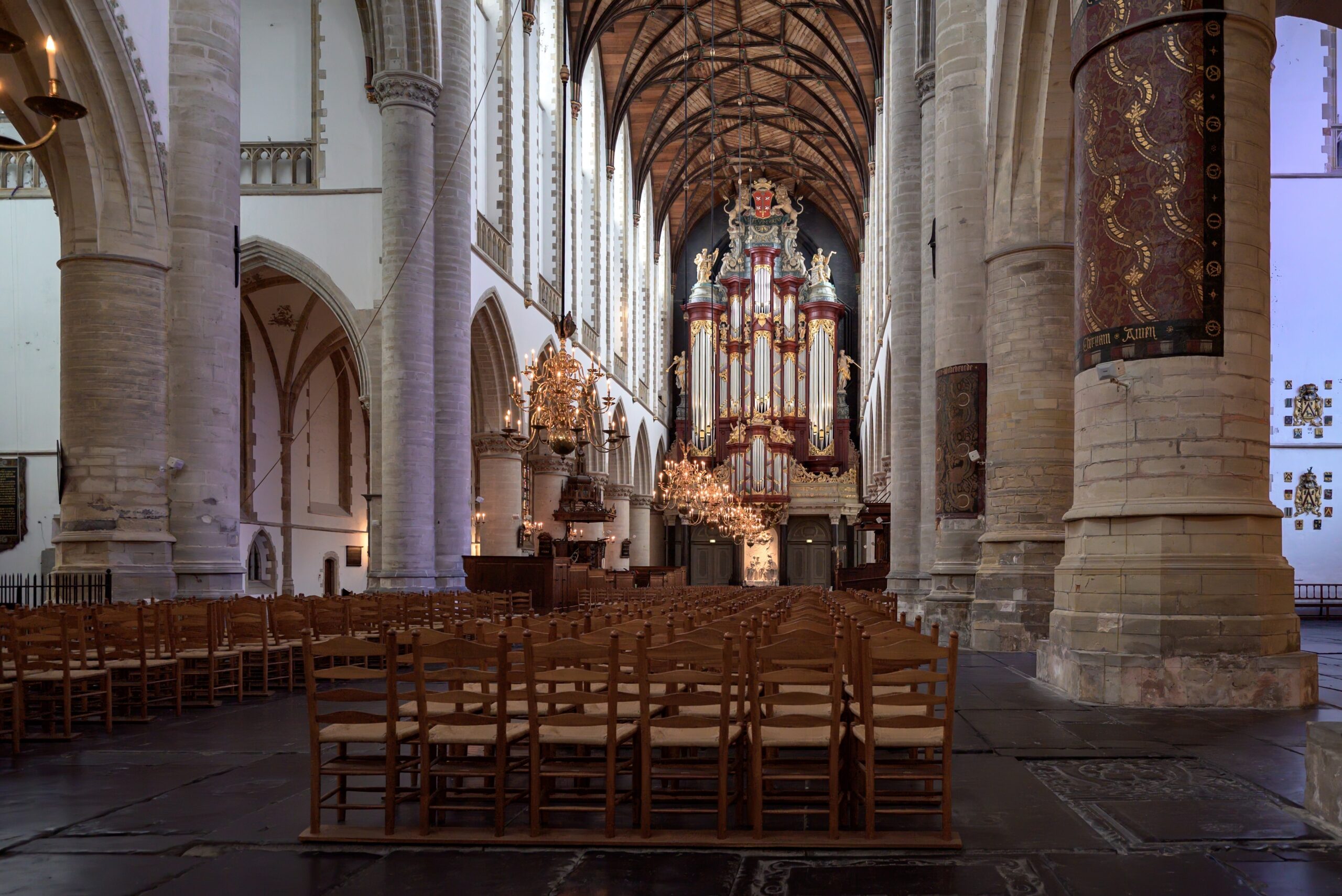
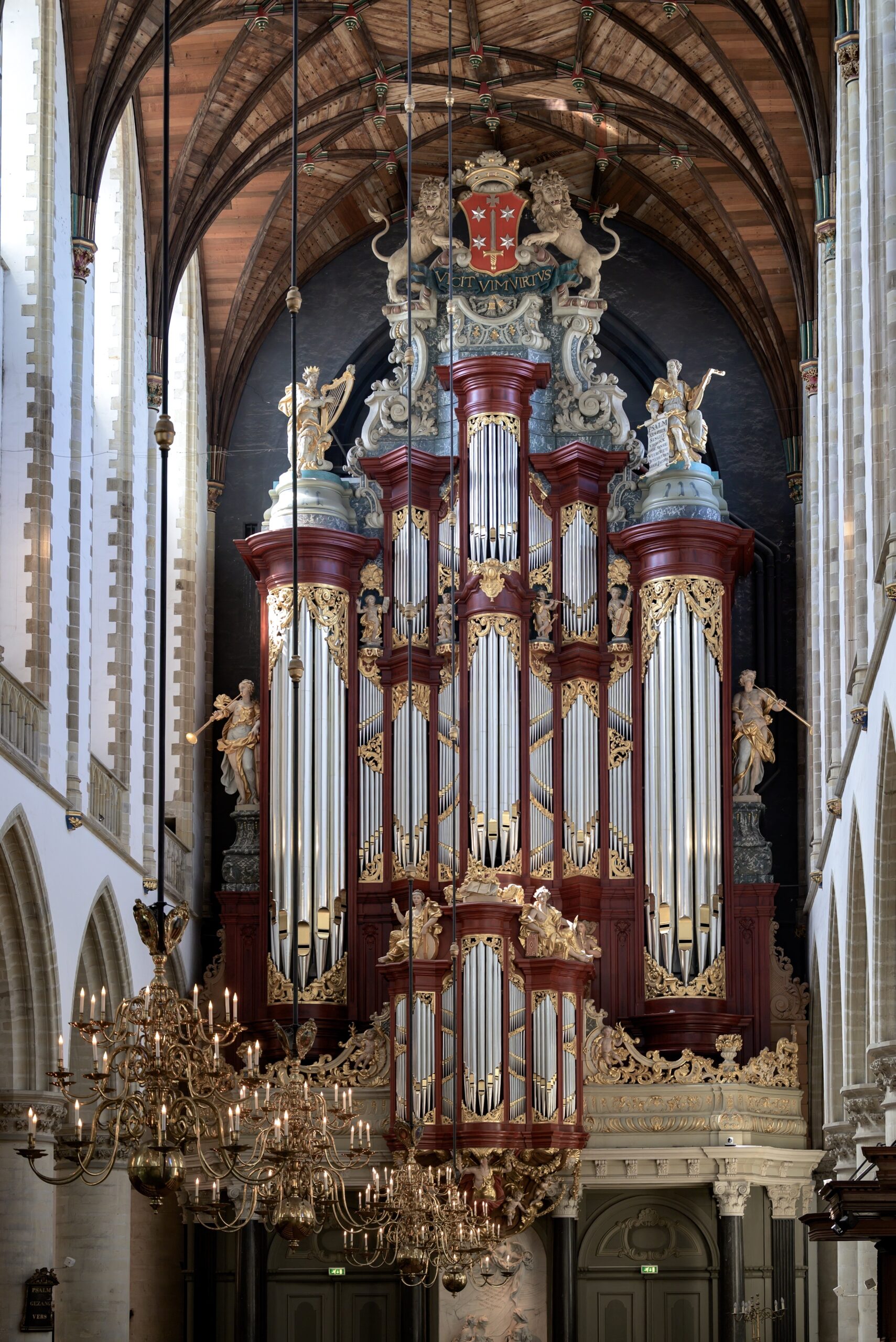
Grote of Sint-Bavokerk
Müller 1738, IIIP/62





Information
The world-famous Müller organ (1738) became an international attraction soon after its completion — and remains one to this day.
In 1740 and 1750, it was played by G.F. Handel, who made a special journey for the occasion. In 1766, the then 10-year-old Mozart performed on it. During summer, weekly city organ concerts attract large audiences, a tradition further amplified by the biennial International Organ Festival.
With this Haarlem organ, its builder — the German-born Christian Müller — secured his place among the greatest organ builders not only of his time, but of all time.
Although it has undergone major restorations — the most significant carried out by Danish firm Marcussen in 1959–60 — the organ has preserved its original concept, with around 90% of its pipework still intact.
In recent years, the Zaan-based organ builder Flentrop, which maintains the instrument, has revoiced several stops to restore the organ’s sound to its former glory. The result is a tone that can be described as grand, noble, and — despite its rich variety of colours — exceptionally cohesive.
Famous stops include the Cornet, designed to reinforce the melody of psalm singing, and the Vox Humana — a register imitating the human voice, of which Handel was reportedly very fond.
Naturally, the church’s superb acoustics greatly enhance the organ’s sonic beauty.
The organ has over 5,000 pipes across 62 stops, spread over three manuals and pedal. The case is made of pine, painted in a mahogany colour. All pipes are metal (a tin-lead alloy). The key and stop action is mechanical (renewed in 1960), and the instrument is tuned in equal temperament — a practical concession to modern concert use across all musical styles.
The Müller organ is primarily played during summer concerts and Sunday services. In addition to public performances, private recitals by one of Haarlem’s city organists have become a popular outing for companies and institutions.
Positif (C-d”’)
- Praestant 8’
- Holpijp 8’
- Quintadena 8’
- Octaaf 4’
- Fluit Douce 4’
- Speelfluit 3’
- Superoctaaf 2’
- Mixtuur VI-VIII st.
- Cymbaal III st.
- Sexquialter II-IV st.
- Cornet IV st. (disc.)
- Fagot 16’
- Trompet 8’
- Tregter regaal 8’
- Tremulant
Hoofdmanuaal (C-d”’)
- Praestant 16’
- Bourdon 16’
- Octaaf 8’
- Roerfluit 8’
- Viola di Gamba 8’
- Roerquint 6’
- Octaaf 4’
- Gemshoorn 4’
- Quintpraestant 3’
- Woudfluit 2’
- Mixtuur IV-X st.
- Scherp VI-VIII st.
- Tertiaan II st.
- Trompet 16’
- Trompet 8’
- Oboe 8’
- Trompet 4’
- Koppel BW - HW
- Koppel RW - HW
Bovenklavier (C-d”’)
- Quintadena 16’
- Praestant 8’
- Quintadena 8’
- Baarpijp 8’
- Octaaf 4’
- Flagfluit 4’
- Nasard 3’
- Nachthoorn 2’
- Flageolet 1 1/2’
- Sexquialter II st.
- Mixtuur IV-VI st.
- Cymbaal III st.
- Schalmei 8’
- Dolceaan 8’
- Voxhumana 8’
- Tremulant
Pedaal (C-f’)
- Principaal 32’
- Praestant 16’
- Subbas 16’
- Roerquint 12’
- Octaaf 8’
- Holfluit 8’
- Quintprestant 6’
- Octaaf 4’
- Holfluit 2’
- Mixtuur VI-X st.
- Ruischquint IV st.
- Bazuin 32’
- Bazuin 16’
- Trompet 8’
- Trompet 4’
- Cink 2’
- Koppel RW - P
- Koppel HW - P
- Koppel BW - P
The original manual compass is 51 keys (C–d’’’), expandable to 56 keys (C–g’’’) with the Premium subscription.