

A remarkable organ with a rich history
Dordrecht (NL)
Grote Kerk
Kam 1859, IIIP/51


Information
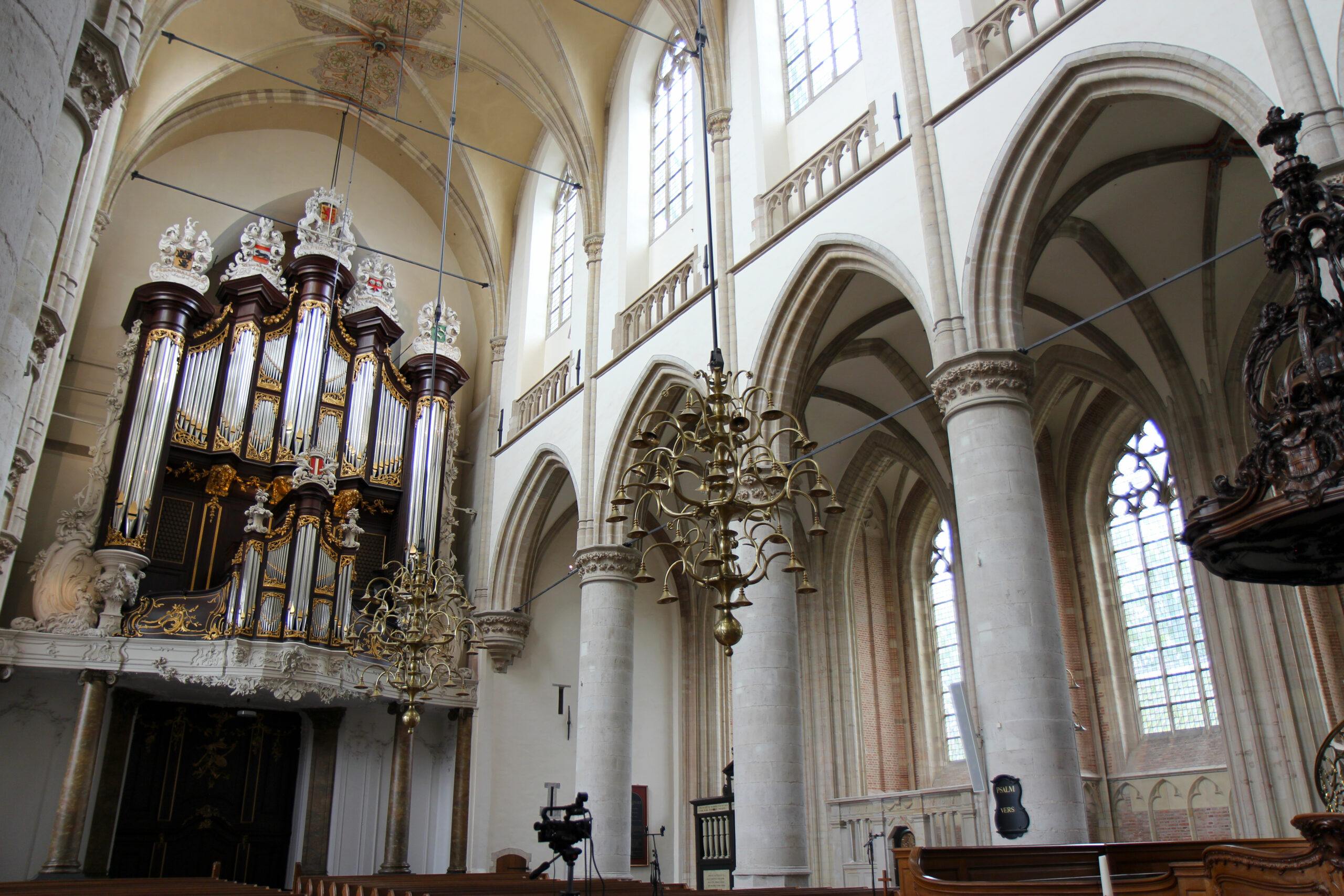
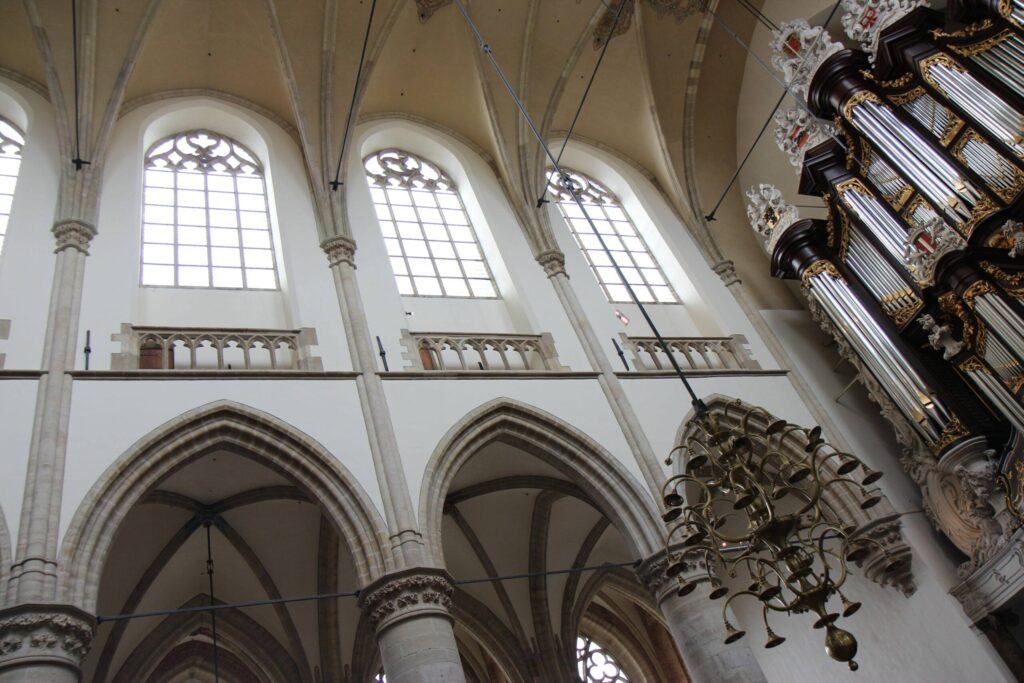
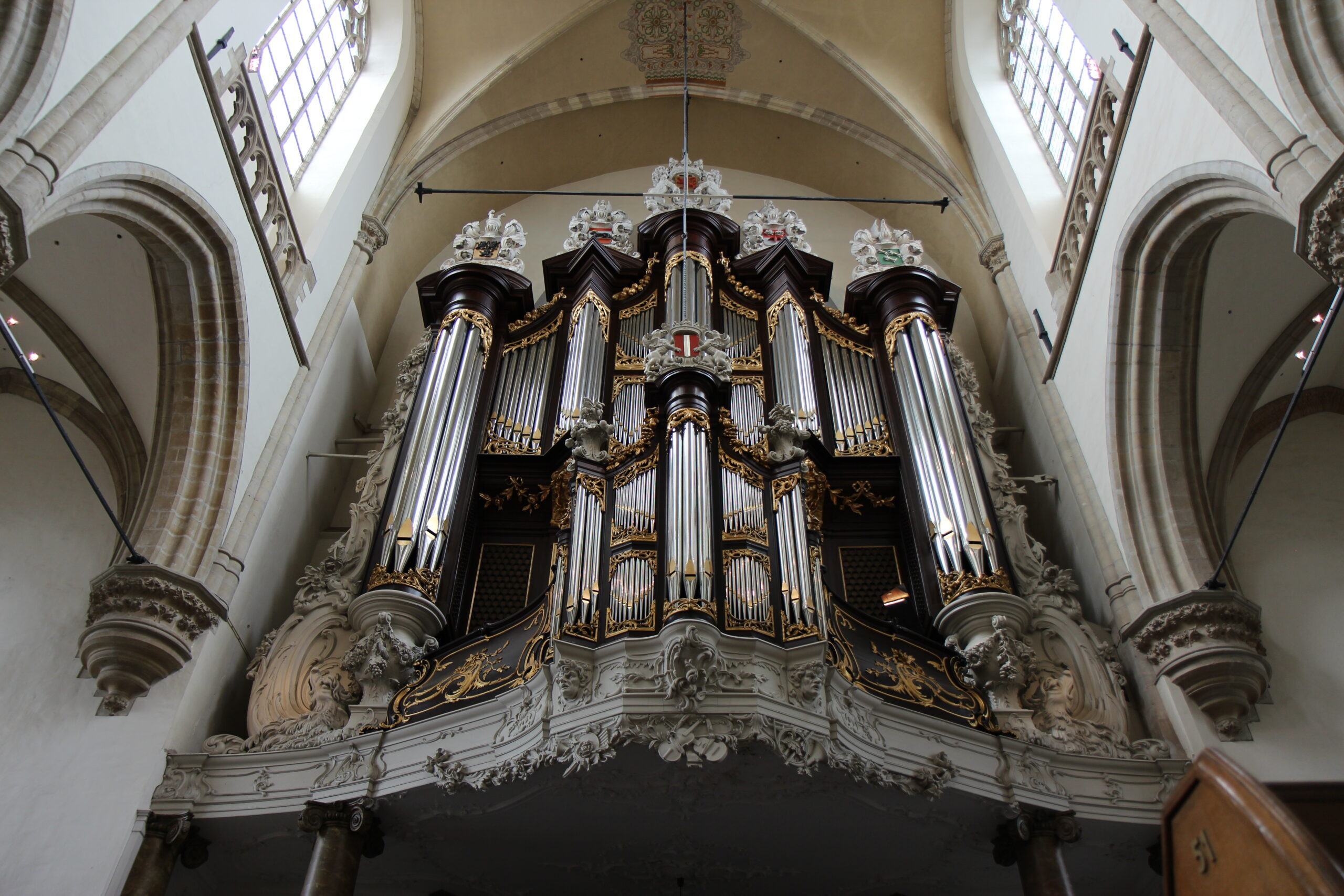
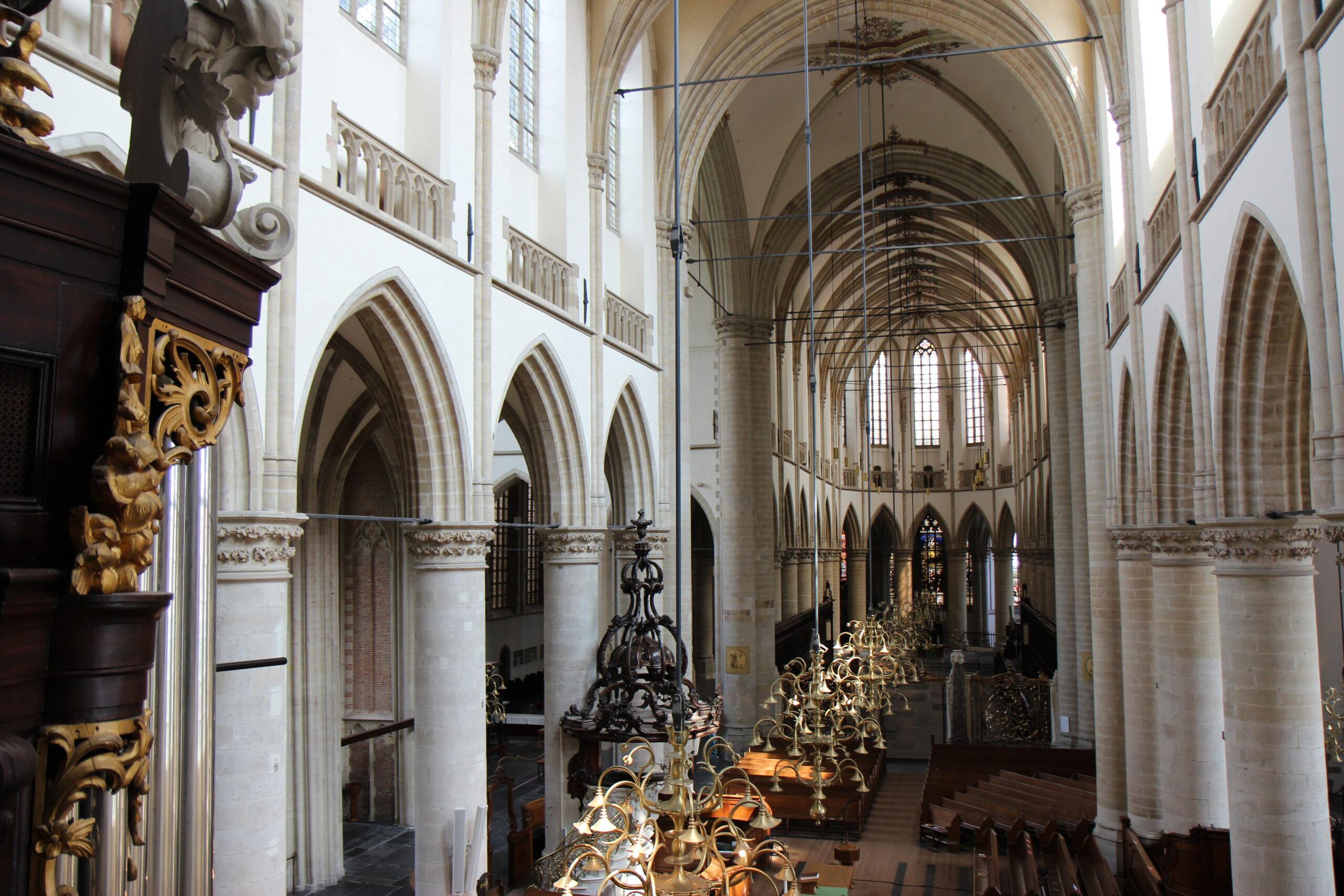
In 1859, organ builder Willem Hendrik Kam (Rotterdam) constructed an entirely new organ inside the historic 1671 case, which is still in place today. The instrument featured 51 stops, divided over three manuals and pedal. Just eight years later, in 1867, numerous deficiencies were identified. In 1869, the firm Bätz-Witte (Utrecht) carried out repair work, using the Mariakoor (Lady Choir) as a temporary workshop.
During this intervention, the stoplist was revised, and the Scherp on the Hoofdwerk was replaced by a Gemshoorn 2′. Following a large-scale restoration of the Grote Kerk between 1902 and 1939, the organ underwent a major overhaul by Gerrit van Leeuwen & Zn. (Leiderdorp). The front pipes were polished and coated with a protective varnish. The Violon 16′ in the Pedal and the Viola di Gamba 8′ in the Bovenwerk were replaced, the pedalboard was renewed, and a coupling between the Rugwerk and Pedal was added. Because the touch of the Hoofdwerk remained extremely heavy, a pseudo-Barker system was installed in 1939.
However, the action remained a weak point. Alongside the restoration of the church itself, the organ received a partial restoration in 1986/87 by Ernst Leeflang B.V. (Apeldoorn). As this work only addressed some of the issues, further intervention was still needed.
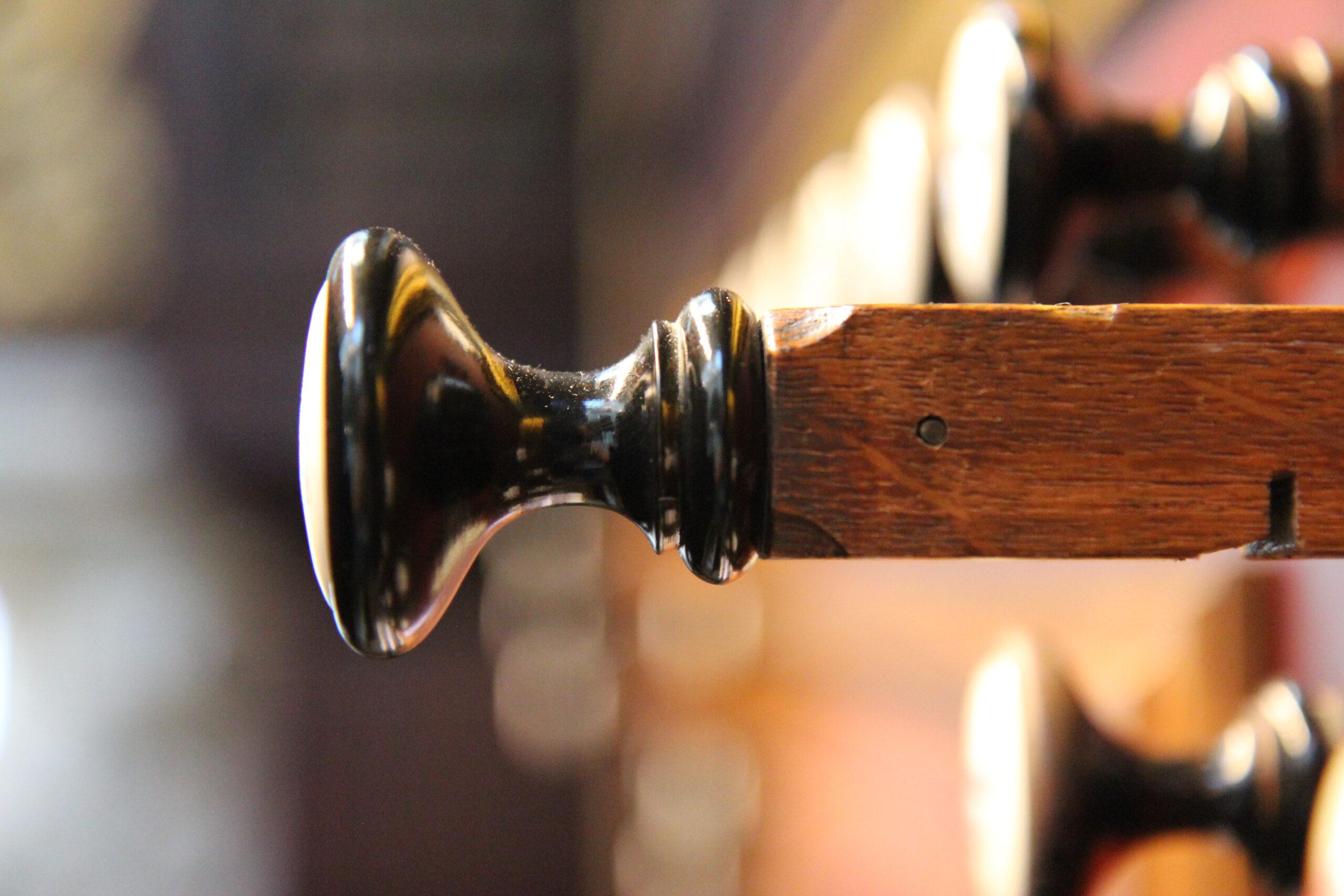
In 2007, Reil B.V. (Heerde) began a conservative restoration. The windchests were repaired, and the warped front pipes — stripped of the varnish applied in 1939 — were restored and reinforced. The pseudo-Barker system was removed in late 2009, and the action was redesigned to allow for a playing experience that could be described as “responsive and natural.” This work was completed in April 2010.
In 2021, the final phase of the conservation-focused restoration was completed: the five large windchests were fitted with new sheepskin, and tears in the bellows were repaired.
Source: grotekerk-dordrecht.nl
Positief (C-f”‘)
- Bourdon 16′
- Prestant 8′
- Bourdon 8′
- Salicet 8′
- Gemshoorn 8′
- Octaaf 4′
- Gemshoorn 4′
- Quint 3′
- Octaaf 2′
- Cornet V
- Mixtuur III-IV
- Trompet 8′
- Dulciaan 8′
- Tremulant
Manuaal (C-f”’)
- Prestant 16′
- Gedekt 16′
- Prestant 8′
- Roerfluit 8′
- Holfluit 8′
- Octaaf 4′
- Roerfluit 4′
- Quint 3′
- Octaaf 2′
- Gemshoorn 2′
- Cornet V
- Mixtuur IV-V
- Trompet 16′
- Trompet 8′
- Clarinet 4′
- Pos - Man
- Bw - Man
Bovenwerk (C-f”‘)
- Quintadena 8′
- Baarpijp 8′
- Holpijp 8′
- Viola di Gamba 8′
- Openfluit 4′
- Salicet 4′
- Gedektfluit 4′
- Nazard 3′
- Woudfluit 2′
- Carillon III
- Schalmei 8′
- Vox Humana 8′
- Tremulant
Pedaal (C-d’)
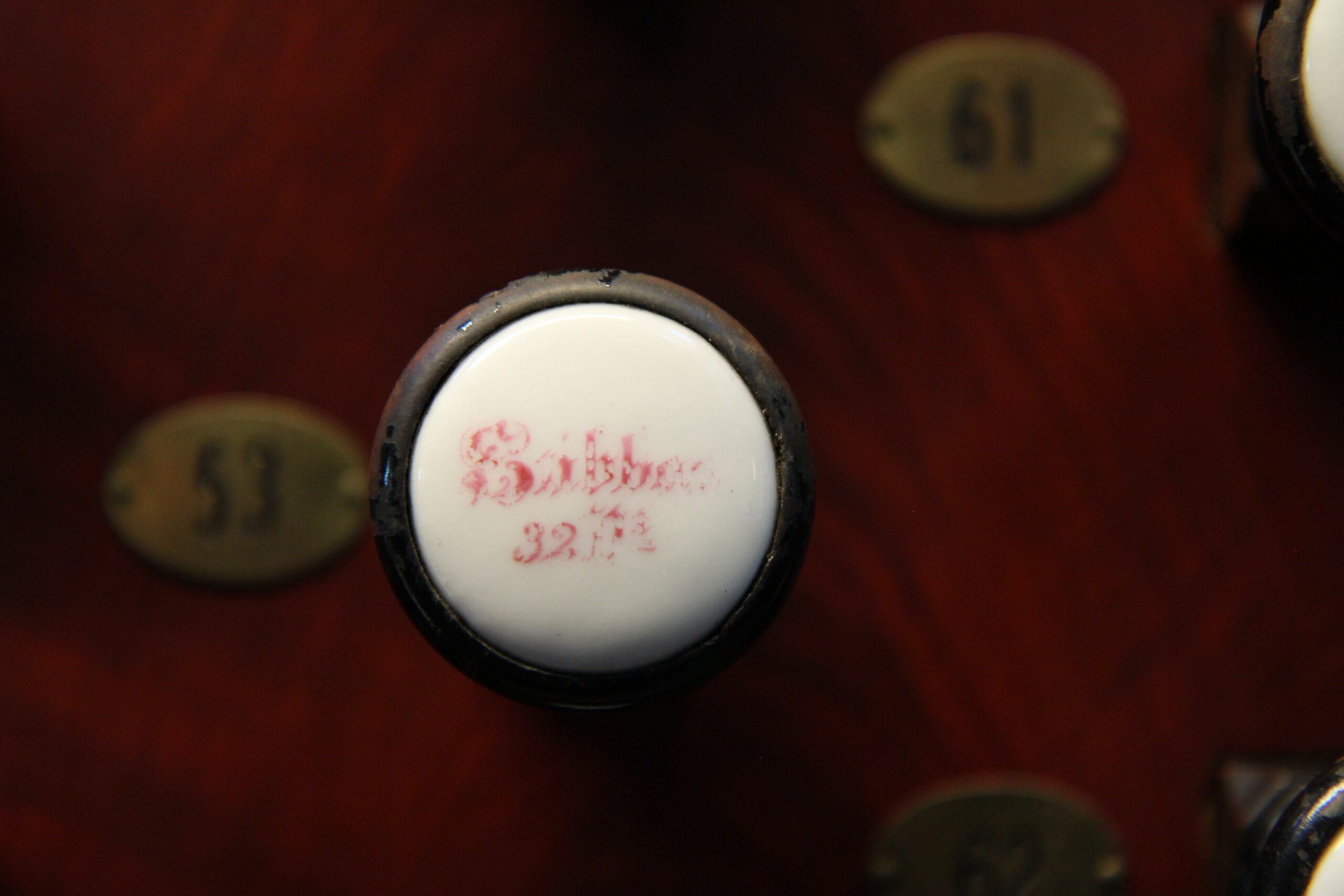
- Subbas 32′
- Principaal 16′
- Subbas 16′
- Violon 16′
- Octaaf 8′
- Gedekt 8′
- Quint 6′
- Octaaf 4′
- Bazuin 16′
- Trombone 8′
- Trompet 4′
- Man - Ped
- Pos - Ped
- Bw - Ped