
An impressive stylistic replica
Dordrecht (NL)
Grote Kerk
Verschueren 2007, IIP/34

Information
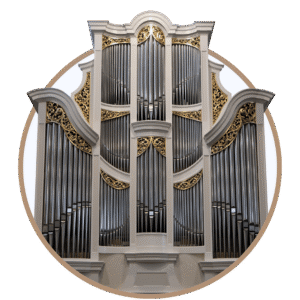
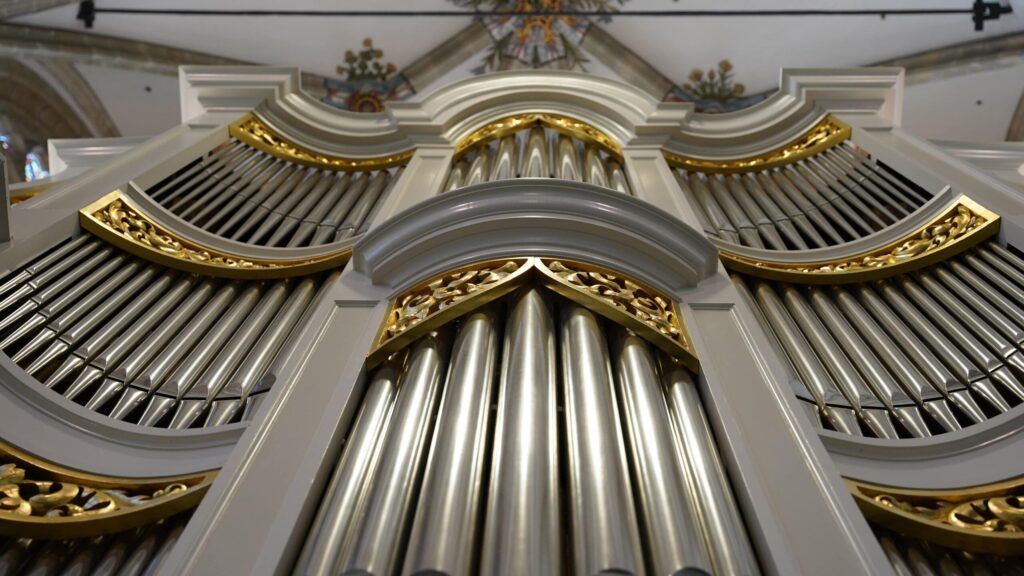
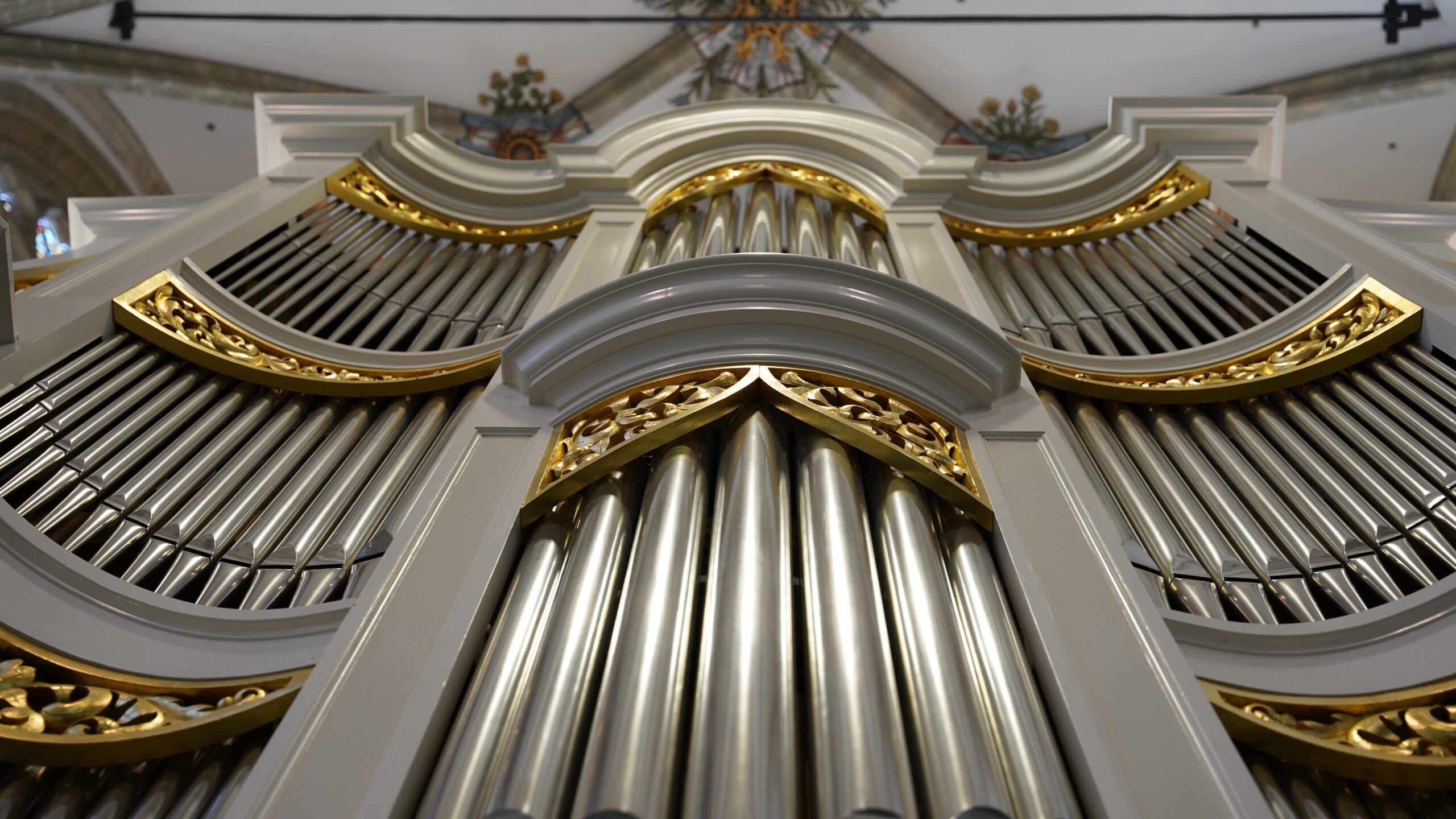
On 26 September 2007, Verschueren Orgelbouw (Heythuysen) completed a unique project: the creation of the Bach Organ in the Grote Kerk of Dordrecht. This instrument is a significant addition to the Dutch organ landscape in general, and to the Grote Kerk in particular. Never before had a stylistic replica of the work of the renowned organ builder Gottfried Silbermann been constructed in the Netherlands. Moreover, in stylistic terms, the instrument forms a valuable complement to the grand Kam organ — the opus magnum of the Kam organ builders — housed in Dordrecht’s impressive cathedral.
The installation of the Bach Organ was an initiative of the Bach Organ Foundation Grote Kerk Dordrecht. The board aimed to introduce a type of Baroque organ not yet present in the Netherlands — one on which the music of Johann Sebastian Bach could be performed to its fullest potential. Based on this aim, the name Bach Organ was chosen, although the term is open to interpretation and carries a degree of historical and stylistic complexity.
To support the foundation’s orientation on East German Baroque organs in relation to J.S. Bach and his oeuvre, organist and consultant Peter van Dijk organized a study tour from 17 to 19 October 2002. The itinerary included organs in:
– the Brandenburg Cathedral (1725, Joachim Wagner)
– the Freiberg Cathedral (1714, Gottfried Silbermann)
– the Hofkirche in Dresden (1755, Silbermann & Hildebrandt)
– the village church in Störmthal (1723, Zacharias Hildebrandt, inaugurated by Bach)
– the St. Wenzelskirche in Naumburg (1746, Hildebrandt; approved by Bach himself)
– the village church in Erfurt-Büßleben (1702, Georg Christoph Stertzing)
The group also visited Silbermann specialist and organ builder Kristian Wegscheider in Dresden, who contributed data and technical insights.
Following this study tour, the Silbermann organ in Freiberg Cathedral was selected as the primary tonal model. For technical construction and for certain stops not present in the Freiberg organ, elements were drawn from Silbermann’s organs in the St. Petrikirche in Freiberg (1735) and the Dresden Hofkirche. The latter also served as a reference for converting the Freiberg pipe scales from choral pitch to the intended chamber pitch. The Reinhardtsgrimma Silbermann organ (1739) was used as the model for the keyboard design.
The project was reviewed with honorary advisors Gustav Leonhardt and Ton Koopman, whose thoughtful input was gratefully incorporated.
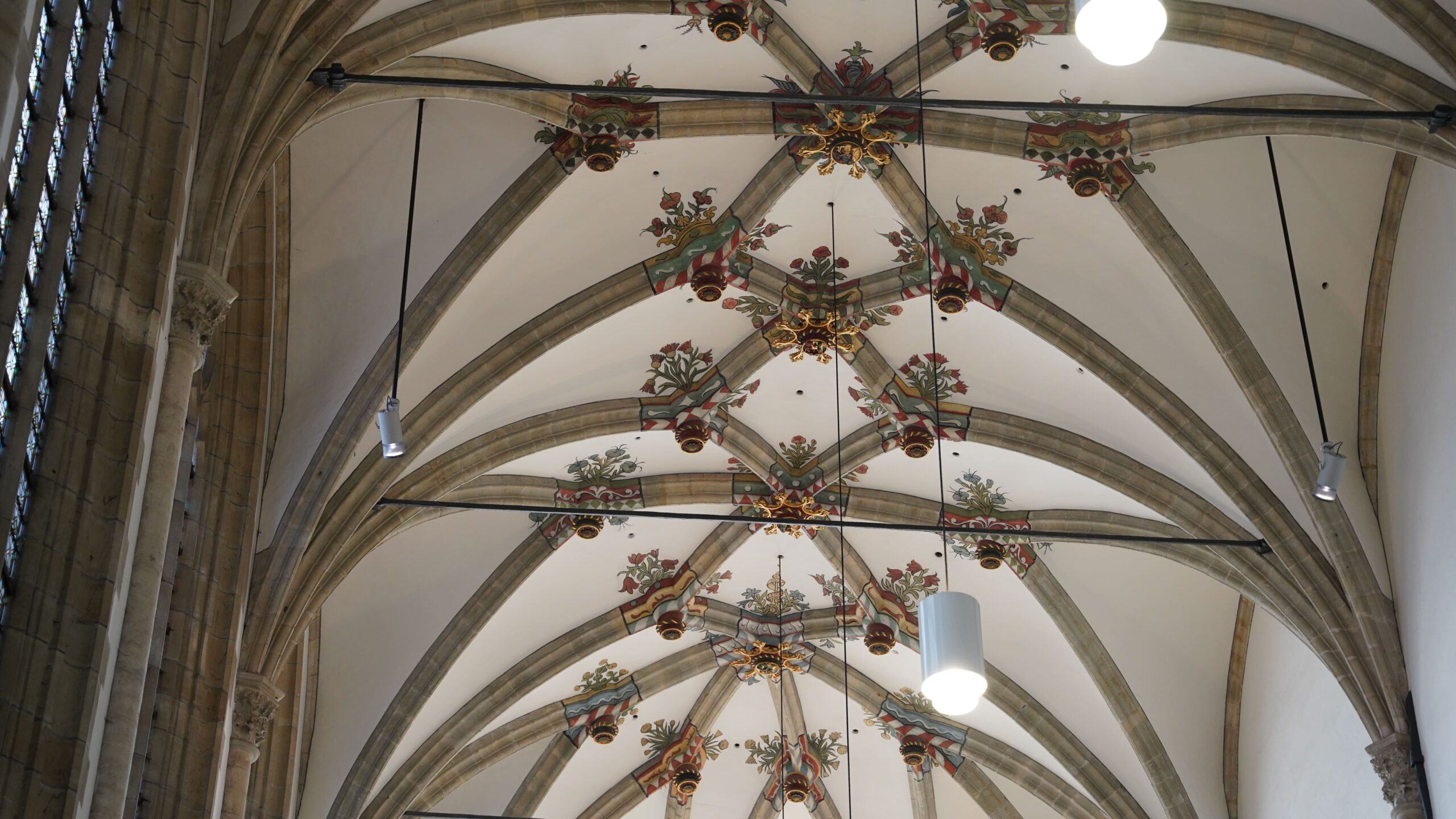
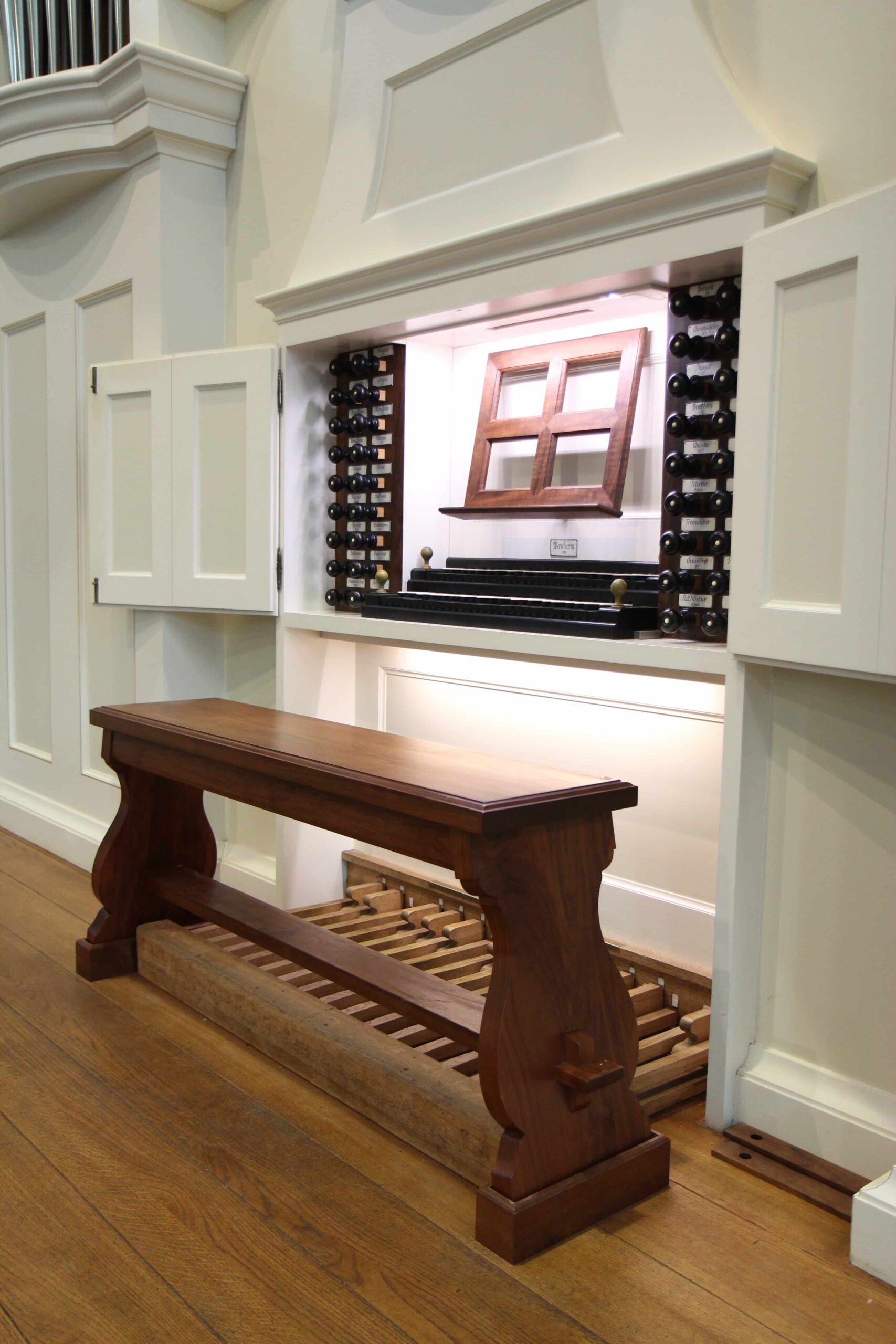
In consultation with the churchwardens of the Grote Kerk, the Dutch National Heritage Agency, and the local heritage office of the city of Dordrecht, the Mariakoor (Lady Choir) was selected as the organ’s location. The instrument was built at ground level, integrated into the architecture of the choir.
After careful consideration of several possible organ types, it was ultimately decided to build a stylistic replica of the work of a Saxon organ builder — either Gottfried Silbermann, particularly his Freiberg Cathedral organ (1714), or Zacharias Hildebrandt. Since its inauguration in 2007, the instrument has stood in the Mariakoor of the Grote Kerk, offering — together with the historic Kam organ — a unique opportunity to perform a broad spectrum of organ repertoire on instruments specifically suited to their respective styles, all within a single space.
Manual (C-d”’)
- Bordun 16′
- Principal 8′
- Rohr-Flöthe 8′
- Viol di Gamba 8′
- Octava 4′
- Spitz-Flöthe 4′
- Quinta 3′
- Octava 2′
- Tertia 1 3/5′
- Cornett 5 fach
- Mixtur 4 fach
- Cimbel 3 fach
- Fachott 16′
- Trompete 8′
- Koppel Ow - Man
Oberwerk (C-d”’)
- Principal 8′
- Gedackt 8′
- Quintadehn 8′
- Octava 4′
- Rohr-Flöthe 4′
- Nassat 3′
- Octava 2′
- Gemshorn 2′
- Tertia 1 3/5′
- Quinta 1 1/2′
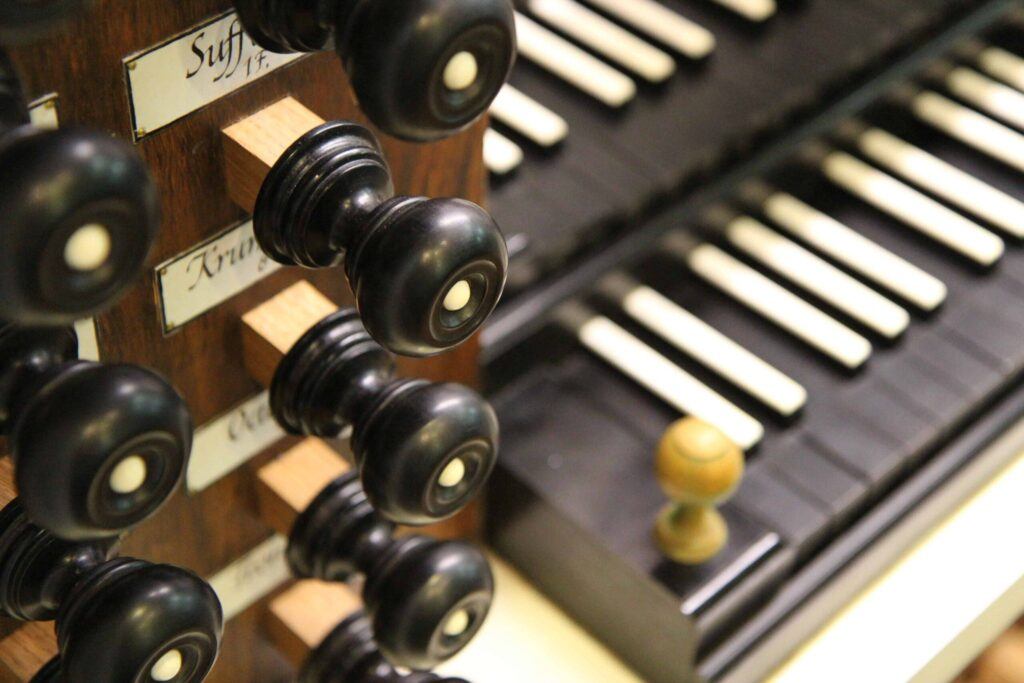
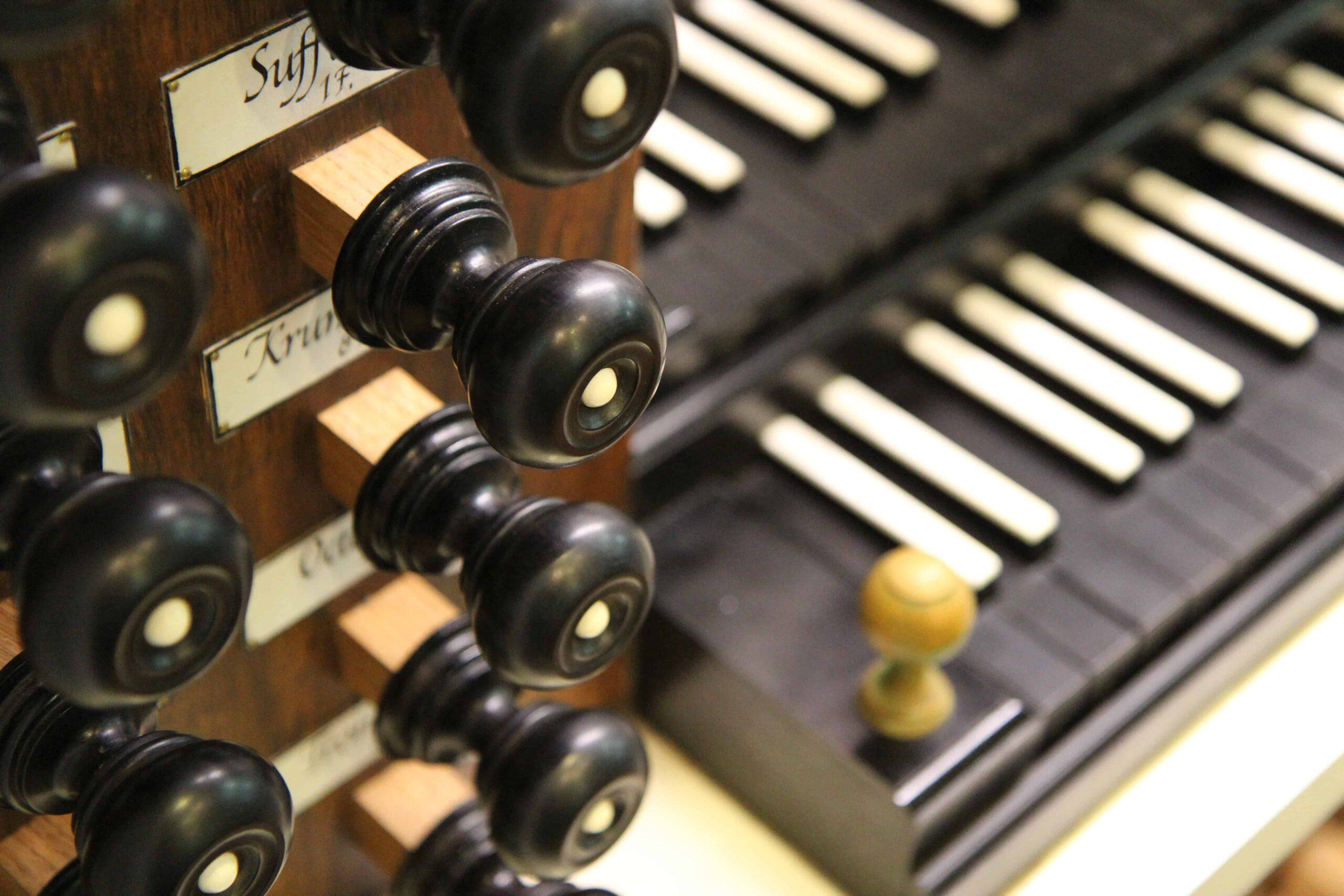
- Suffloeth 1′
- Mixtur 4 fach
- Krumbhorn 8′
- Tremulant
Pedal (C-d’)
- Principal-Baß 16′
- Octav-Baß 8′
- Octava 4′
- Pedal Mixtur 6 fach
- Posaunen-Baß 16′
- Trompeten-Baß 8′
- Clarin-Baß 4′
- Baß ventil
The original manual compass is 51 keys (C–d’’’), expandable to 54 keys (C–f’’’) with the Premium subscription.
The original pedal compass is 27 keys (C–d’), expandable to 30 keys (C–f’) with the Premium subscription.