

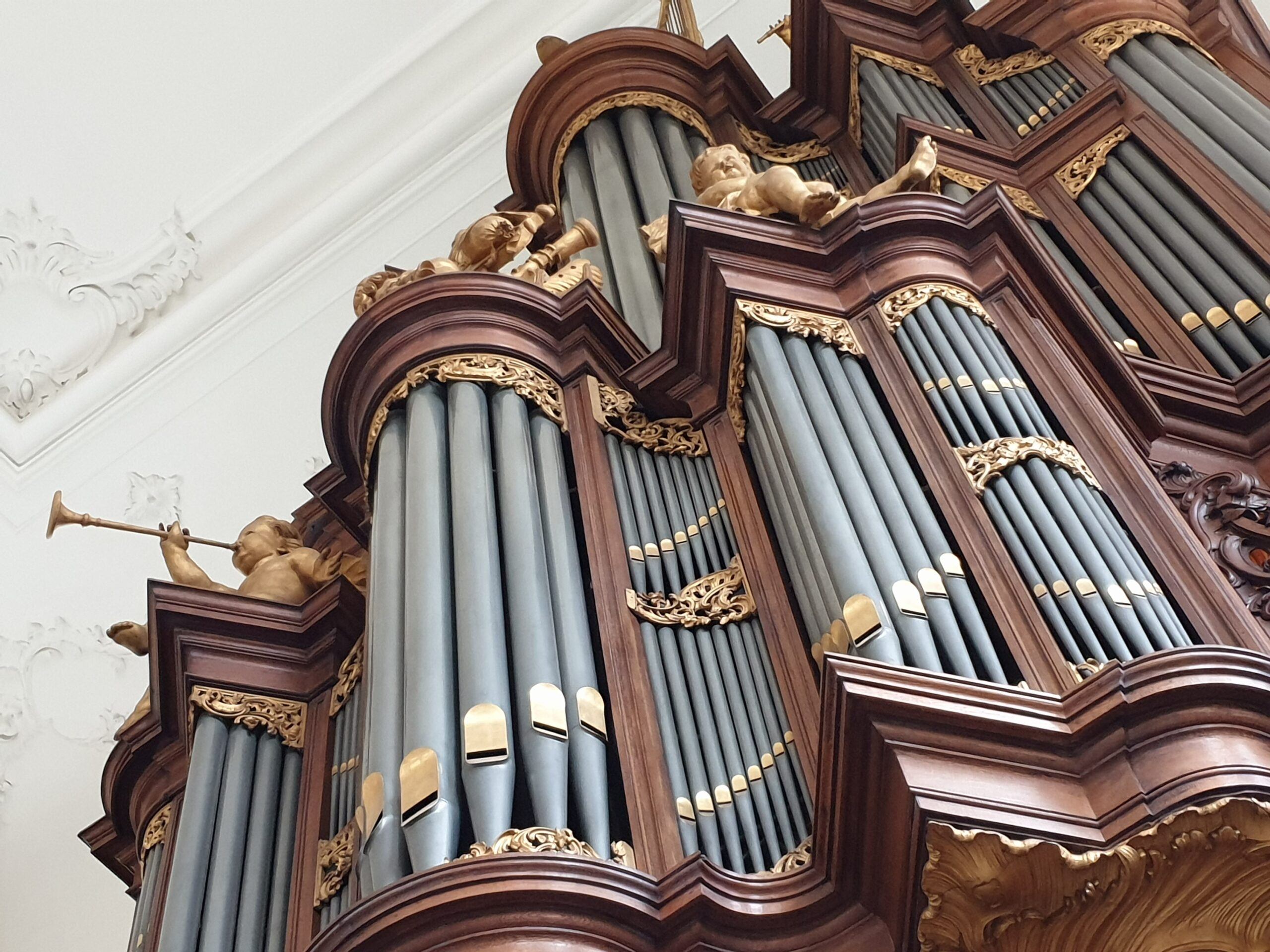
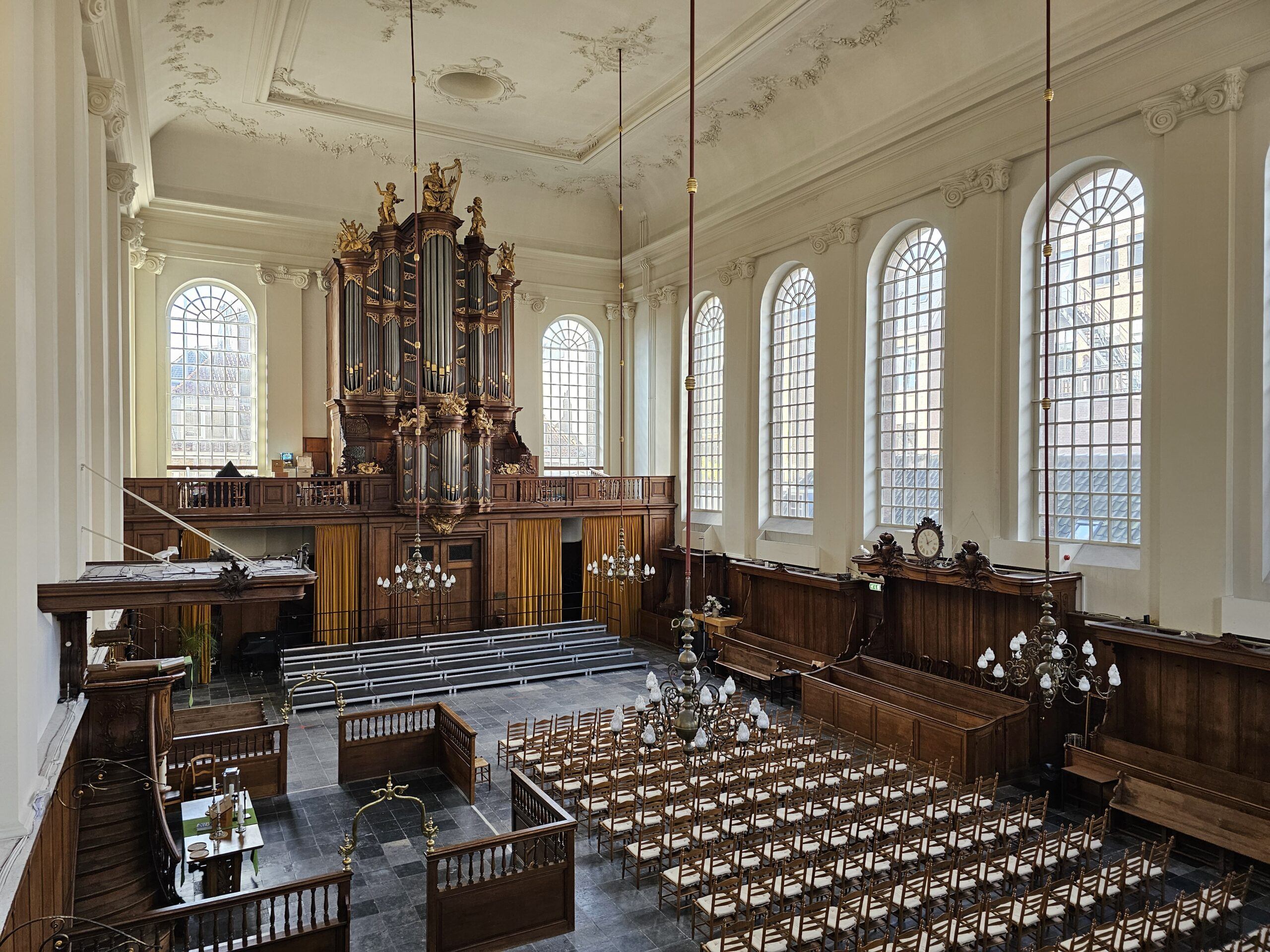
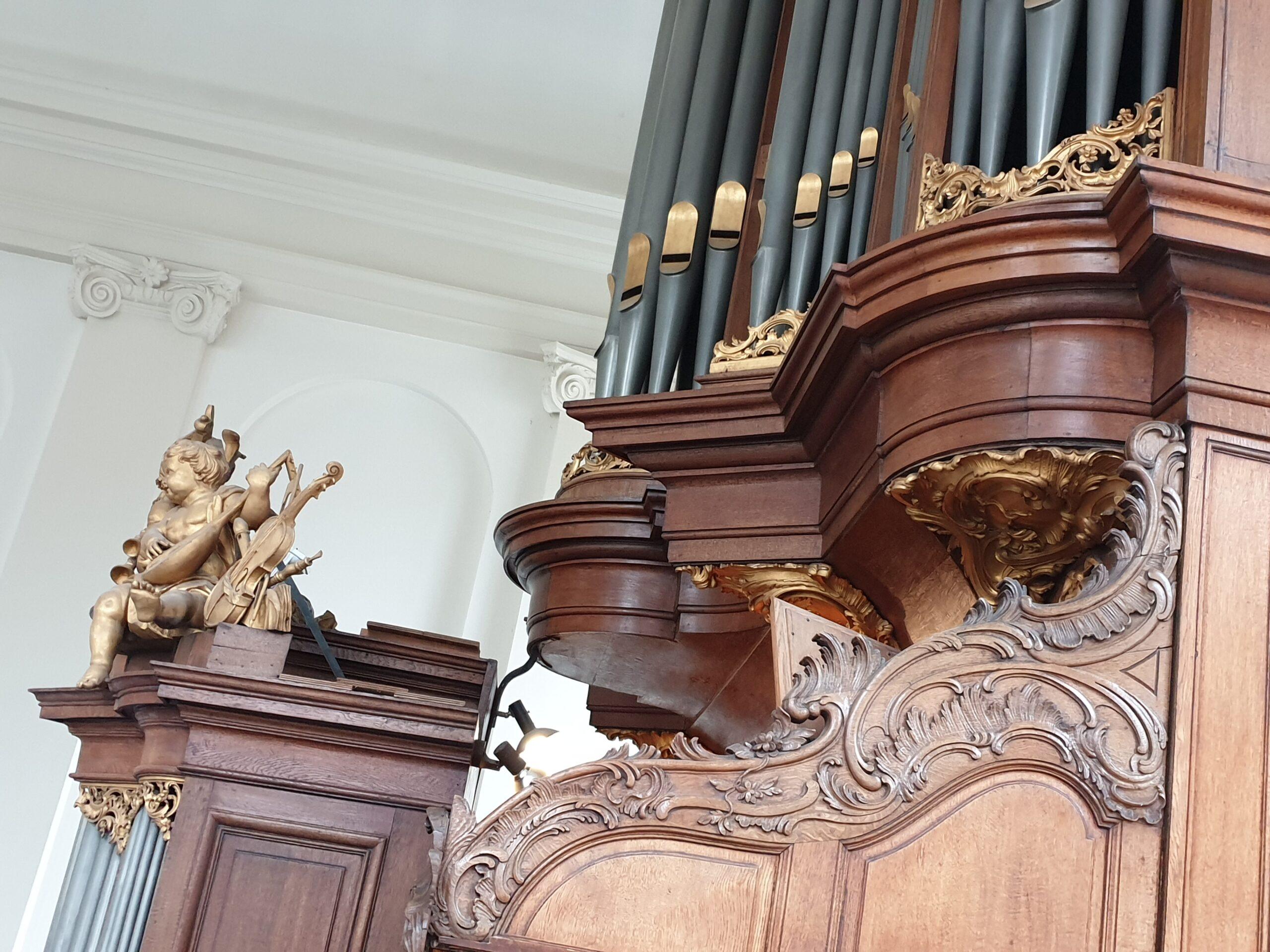
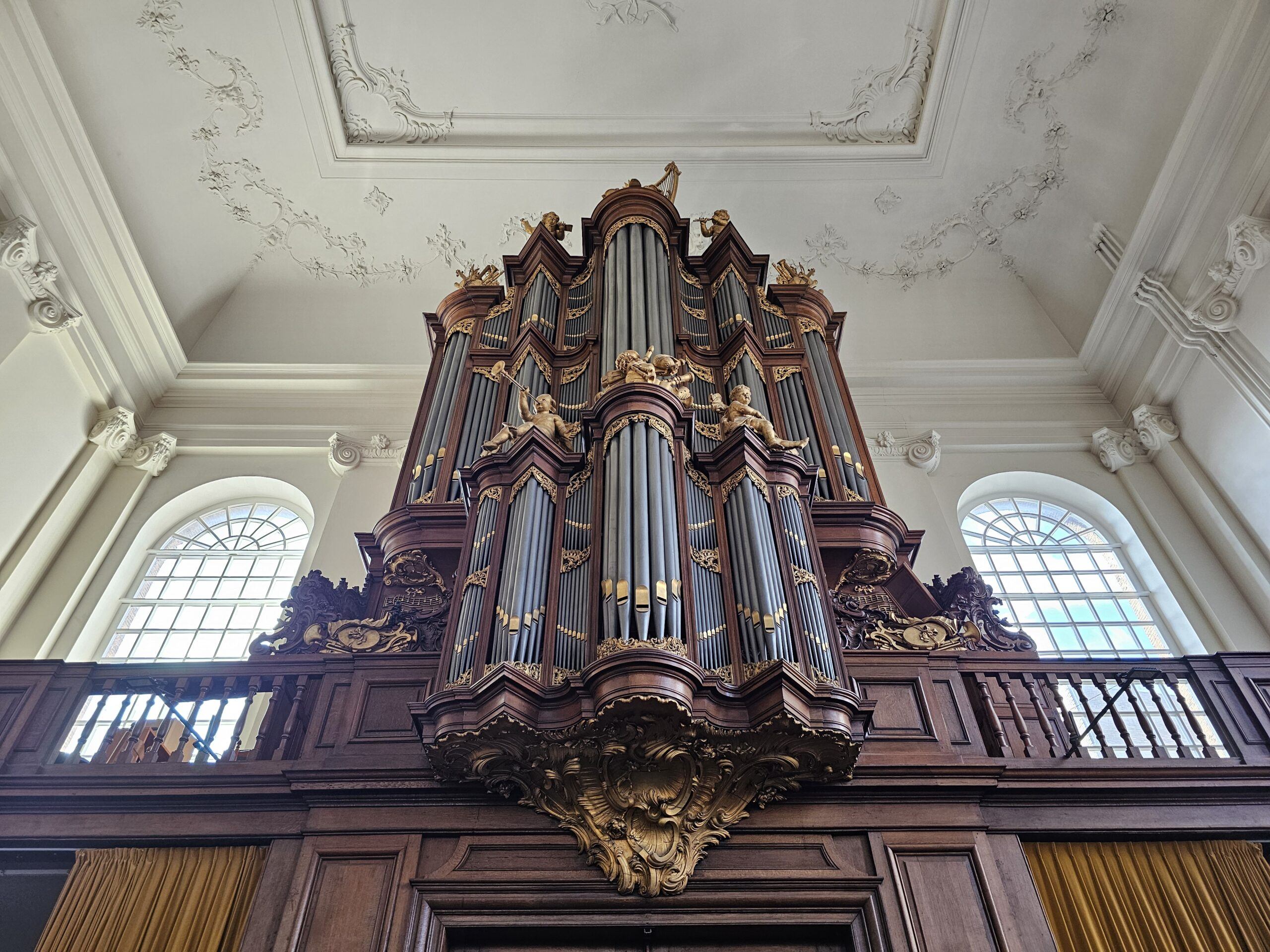
A Bätz masterpiece, revered and renowned.
Den Haag (NL)
Lutherse Kerk
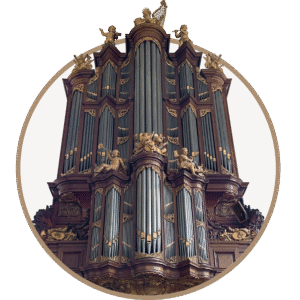
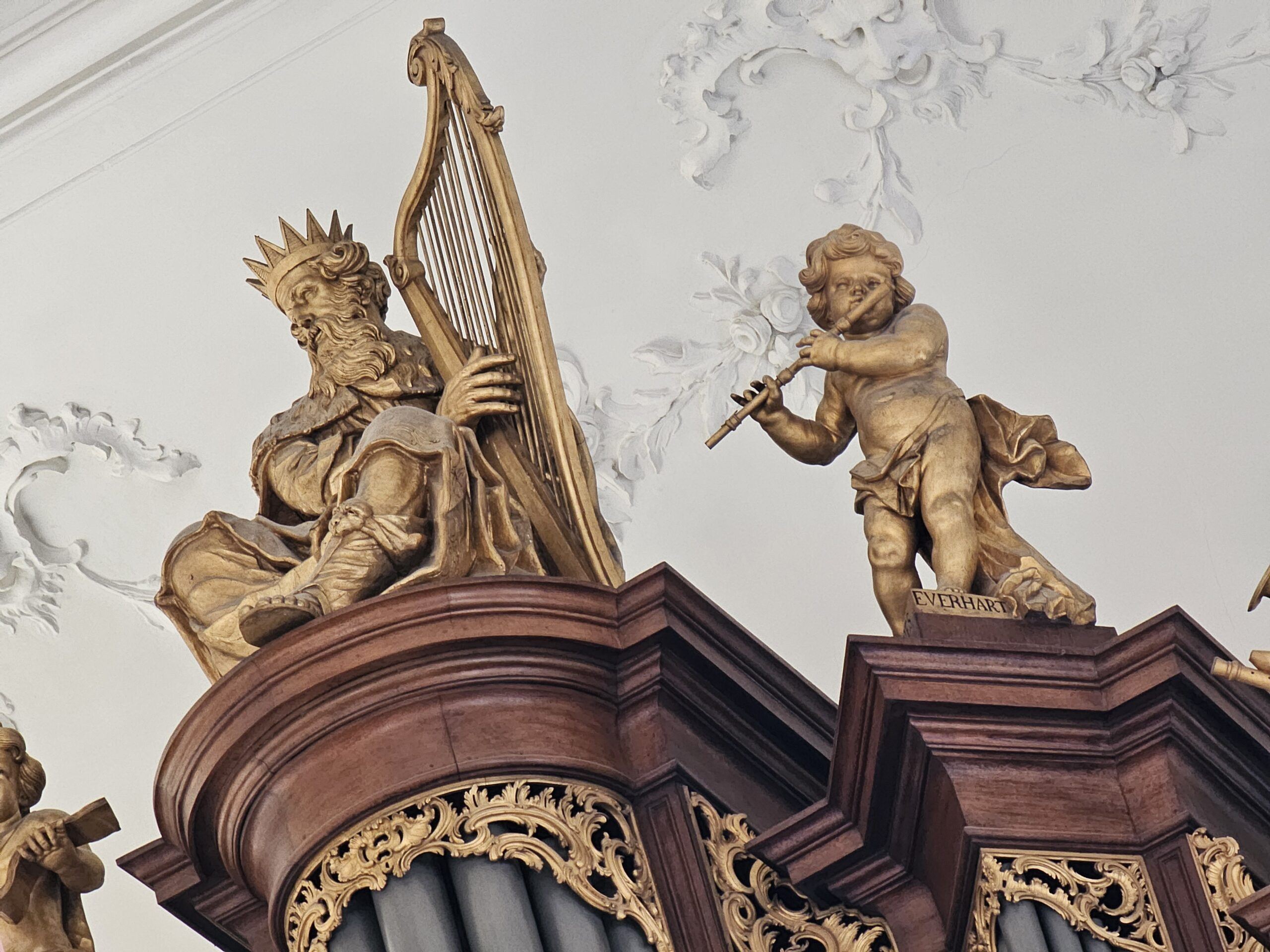
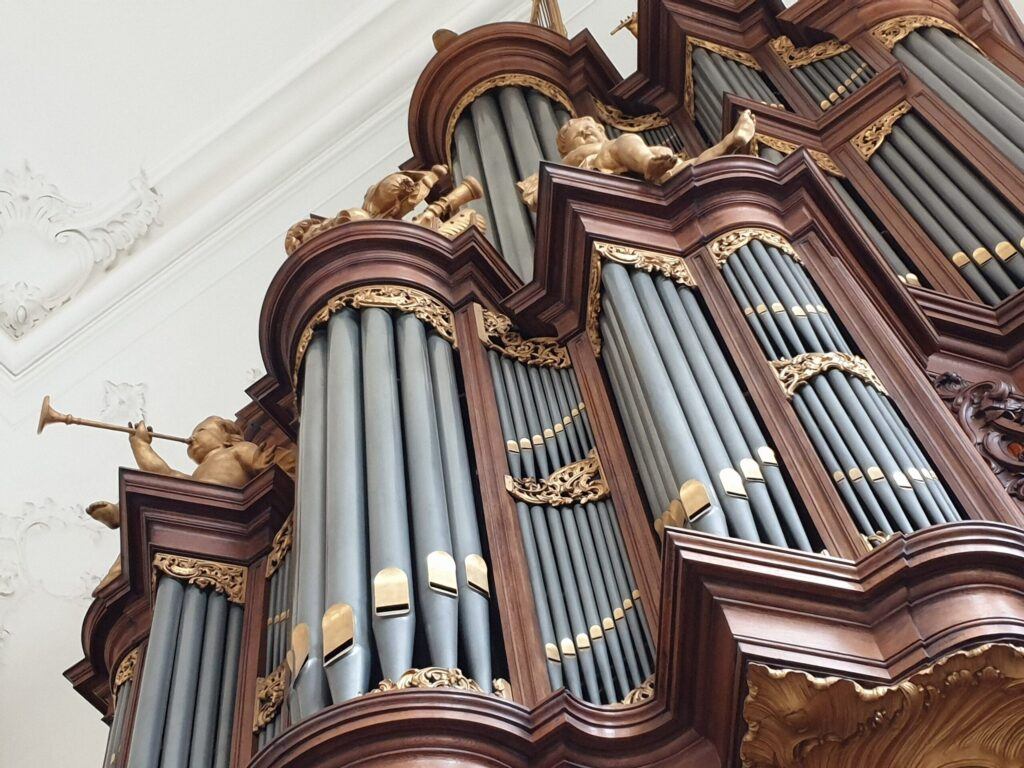
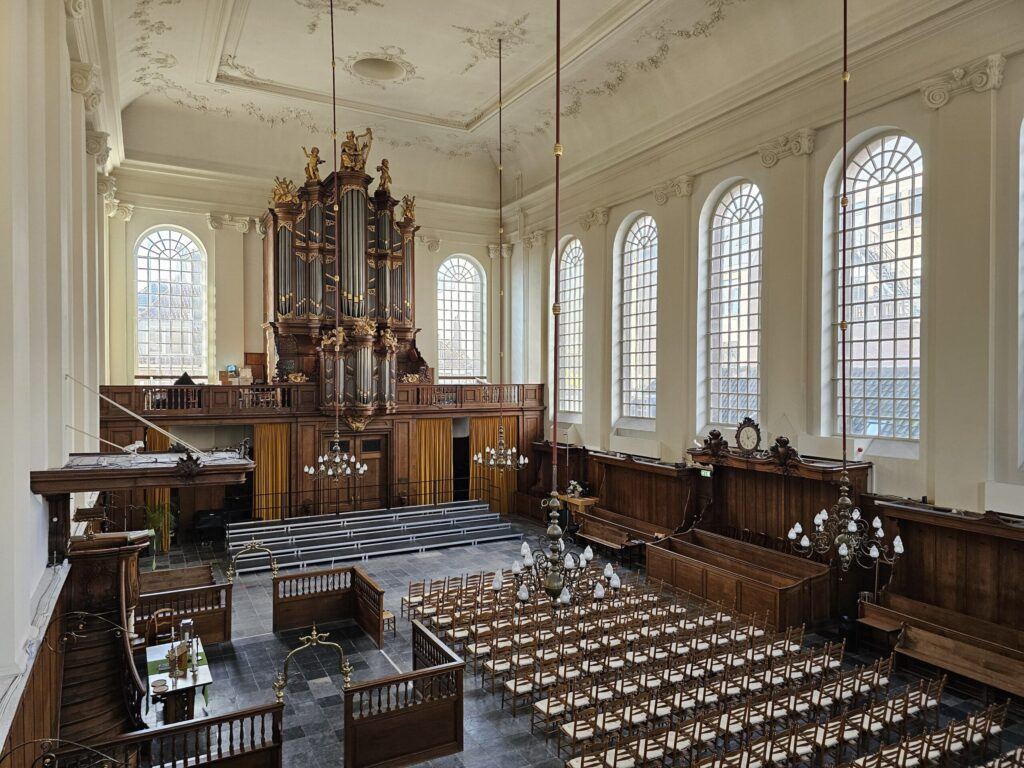
J.H.H. Bätz 1762, IIIP/50

Information
An organ was already present in the former church building of the Evangelical Lutheran congregation in The Hague, built in 1648 by Hans Wolff Schonat. In 1668, organ builder Appolonius Bosch carried out repairs. Later, in 1724, Rudolph Garrels — who had recently established himself as an organ builder in The Hague — modified the organ and also enhanced the casework.
In 1753, Johann Heinrich Hartmann Bätz built a new organ within the existing cases, incorporating pipework from several older stops. In 1759, this organ was dismantled and stored by Bätz due to the demolition of the church building and construction of the present church. The current organ was completed in 1762, and its structure has largely been preserved to this day. The windchests of the Hauptwerk and Rugwerk date from 1753, while those of the Pedal and Oberwerk are from 1762. The pipework of the Hauptwerk and Rugwerk is primarily from 1753, and that of the Pedal and Oberwerk dates from 1762. In 1753, Bätz reused three stops from the former Schonat organ in the Rugwerk — Holpijp 8′, Octave 2′, and three ranks of the Mixture. The fourth rank of the Mixture is likely by Garrels. This pipework is still present in the Rugwerk today.
Until 1824, the instrument remained largely unchanged aside from minor repairs. In 1824, Jonathan Bätz, grandson of Johann Heinrich Hartmann, carried out restoration and modifications. In 1837, Jonathan Bätz once again repaired and altered the organ, implementing several changes to the specification. In 1891, Johann Frederik Witte — who continued the Bätz firm — replaced the façade pipes. During this work, the double ranks of the Prestant stops were removed and rendered inactive.
In 1921, a swell division was added to the organ, pneumatically supplied using the windchests of the Oberwerk and Pedal. A new Sesquialtera II was placed in the Rugwerk, and an electric blower was installed. These works were carried out by organ builder A. Bik of Amsterdam. In 1948, Bik added two stops to the Oberwerk — an Octave 4′ and a Scharf III ranks. The Salicional 4′ by Jonathan Bätz was replaced by a new Nasard 3′.
Starting in 1988, the organ underwent a phased restoration by Flentrop Orgelbouw of Zaandam. In 1988, the two Pedal windchests were restored, followed in 1995 by the Rugwerk windchest, including a reconstruction of the Sesquialtera II.
A comprehensive restoration of all previously unrestored components took place from June 2006 to September 2007. This included the windchests of the Hauptwerk, Oberwerk, and Swell, as well as the wind system, key and stop action, keyboards, pipework, and case. The restoration was based on the situation as of 1762/1837, while retaining the 1921 Swell division.
Source: https://www.luthersdenhaag.nl/muziek/
Photos: o.a. Minne Veldman
Rugwerk
- Prestant 8vt
- Holpyp 8vt
- Octaaf 4vt
- Fluit 4vt
- Octaaf 2vt
- Flageolet 1vt
- Sesquialter II sterk disc.
- Mixtuur III-IV sterk
- Dulciaan 8vt
- Tremulant
Hoofdwerk
- Bourdon 16vt
- Prestant 8vt
- Roorfluit 8vt
- Quintadena 8vt
- Octaaf 4vt
- Nagthoorn 4vt
- Quint 3 vt
- Octaaf 2vt
- Woudfluit 2vt
- Mixtuur VI sterk
- Cornet IV sterk disc.
- Fagot 16 vt
- Trompet 8vt
- Trompet 4vt
- Tremulant
- BW – HW
- RW – HW
Bovenwerk
- Prestant 8vt
- Baarpyp 8vt
- Quintadeen 8vt
- Roorfluit 4vt
- Nasart 3 vt
- Fluit 2vt
- Schalmy 8vt
- Vox Humana 8vt
- Tremulant
Zwelwerk
- Holpijp 8vt
- Dolce 8vt
- Viola di Gamba 8vt
- Vox celeste 8vt
- Salicionaal 4vt
- Flûte harmonique 4vt
- Woudfluit 2vt
- Basson-Hobo 8vt
- Tremulant
- Pedaal
- Subbas 16vt
- Bourdon 8vt
- Violoncel 8vt
Pedaal
- Prestant 16vt
- Bourdon 16vt
- Prestant 8vt
- Roorquint 6vt
- Octaaf 4vt
- Bazuin 16vt
- Trompet 8vt
- Trombone 4vt
- HW – Ped
- ZW – Ped
The original manual compass consists of 49 keys (C–c’’’), expandable to 56 keys (C–g’’’) with the Premium plan.
The original pedal compass consists of 25 keys (C–c’), expandable to 30 keys (C–f’) with the Premium plan.
The swell stops are playable from the third manual.