

Grand, versatile, and impressive, a true all-rounder.
Görlitz (DE)
Peterskirche
Mathis 1997-2024, IVP/96


Information
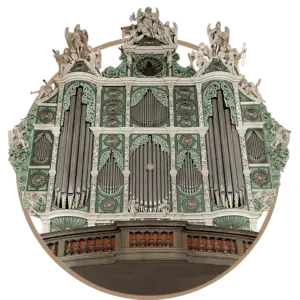
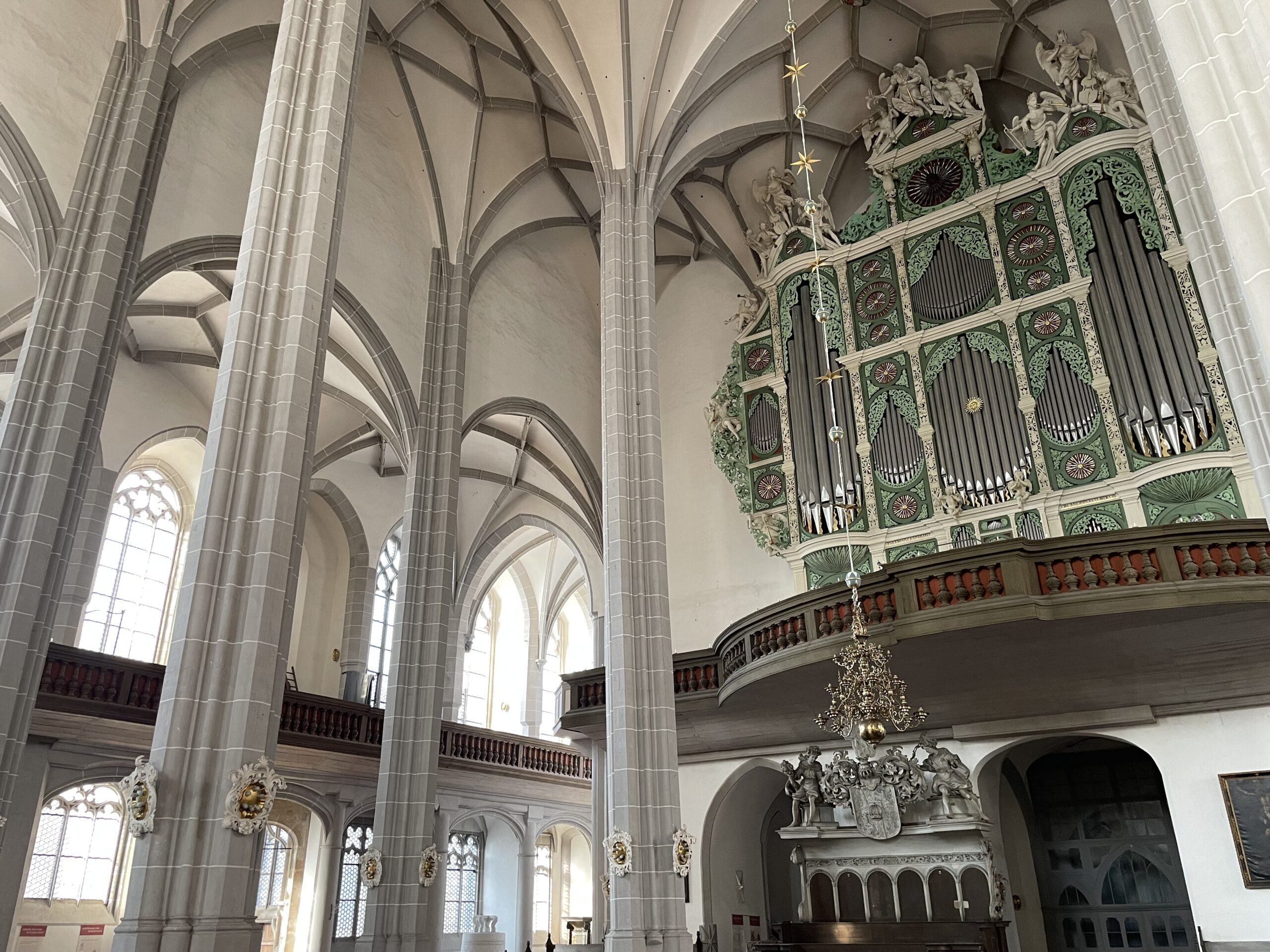
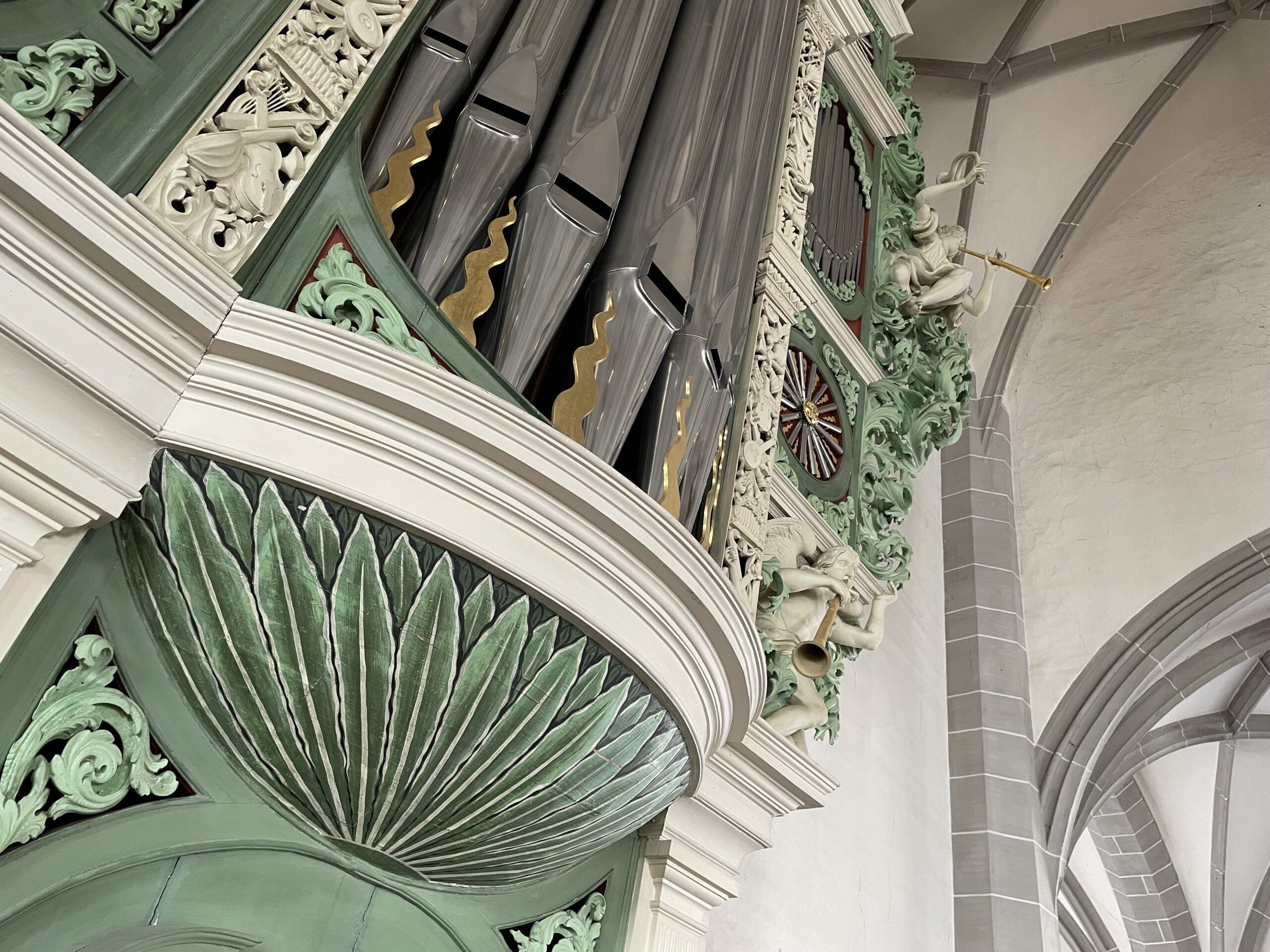
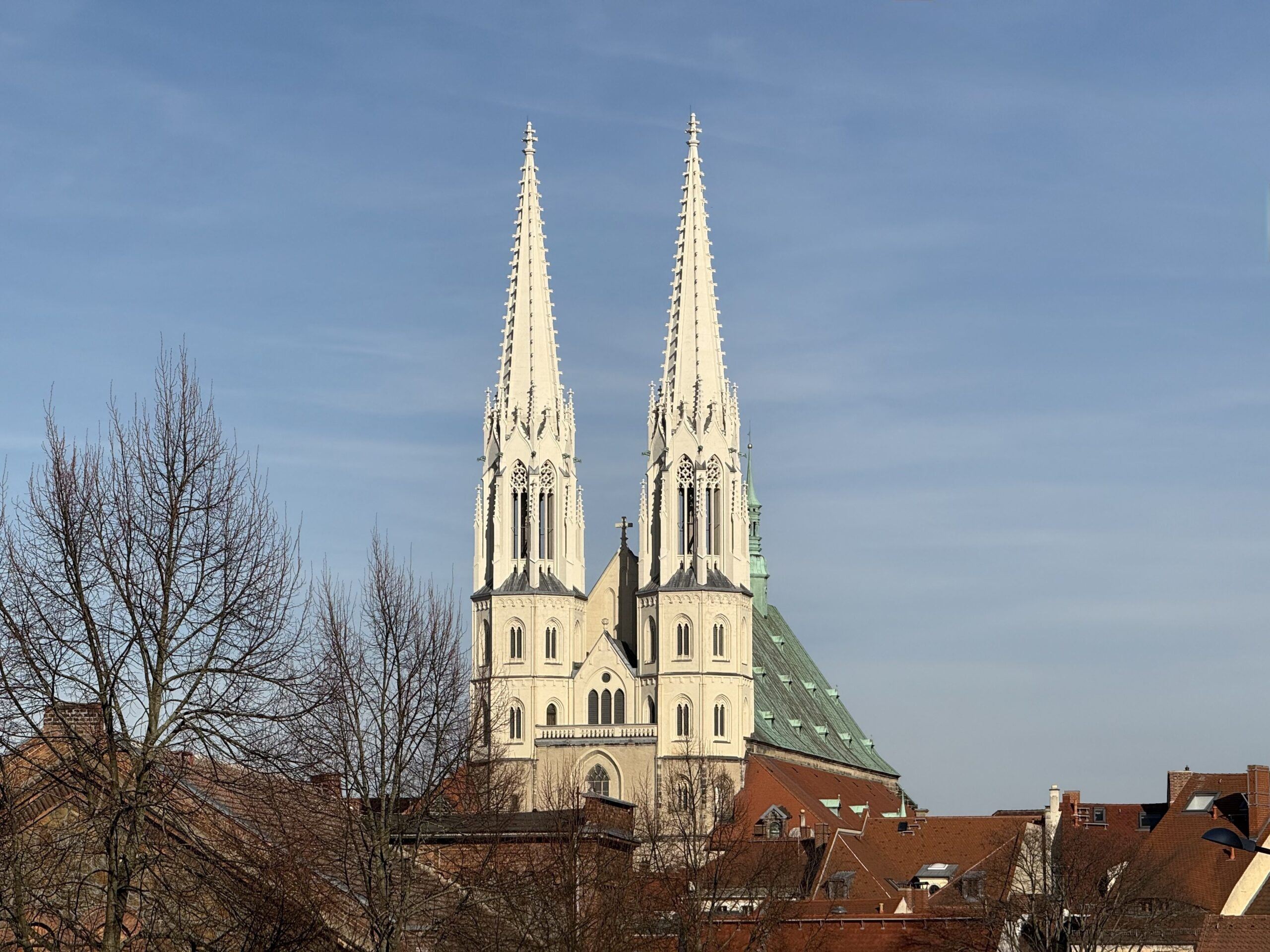
In 1691, the Church of St. Peter and Paul suffered severe damage in a fire. Beginning in 1697, Eugenio Casparini and his son Adam Horatio started building a new organ. The instrument featured 57 stops across three manuals and pedal. The organ case, designed by Johann Conrad Buchau, incorporated 17 sun motifs behind which pipes of equal length were placed. Twelve of these pipes produced individual tones of the unique pedal mixture. The organ was inaugurated in 1703, and in 1704 Christian Ludwig Boxberg published a detailed description of the instrument.
The organ quickly gained attention. In 1715, Tsar Peter I of Russia was so impressed that he commissioned Boxberg to design a “Monstre Orgue” for St. Petersburg. However, this organ was never built. Johann Sebastian Bach referred to the instrument as a “horse organ” due to its heavy touch. Likewise, Johann Andreas Silbermann voiced criticism in 1741. Even in the late 19th century, the organ's unusual windchest construction continued to attract interest. The windchests were divided into compartments with wind partitions and featured valves on the sides that opened upward—contributing to the instrument’s heavy playability.
Between 1827 and 1828, Joseph Schinkel and Carl Friedrich Ferdinand Buckow carried out repairs and modifications, reducing the organ to 55 stops. From 1845 to 1847, Friedrich Nikolaus Jahn rebuilt and expanded the instrument to 64 stops. In 1894, Schlag & Söhne of Schweidnitz constructed a new organ with 53 stops, retaining parts of the original pipework and the historic case.
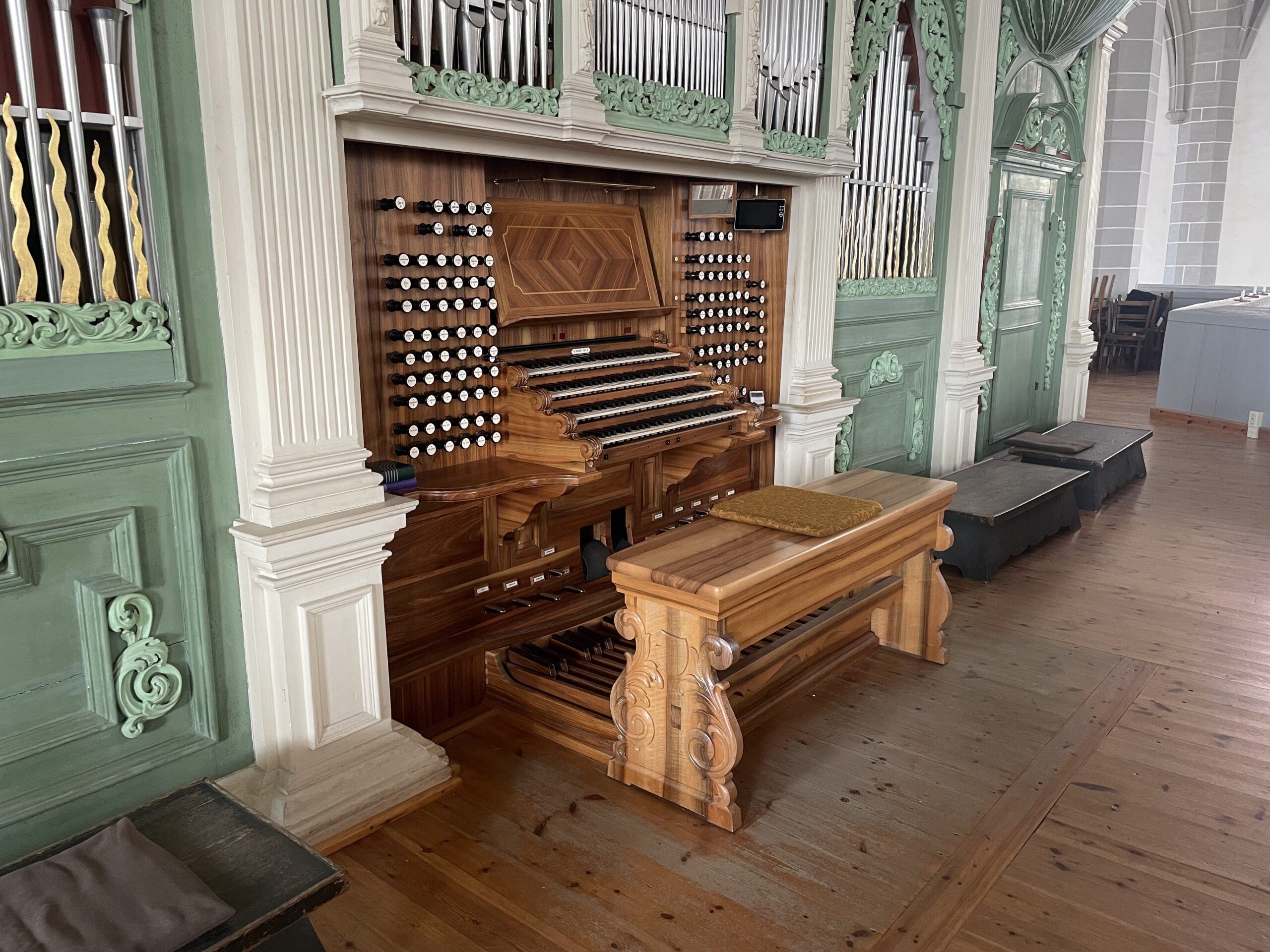
Between 1926 and 1928, W. Sauer of Frankfurt (Oder) built a new organ with 89 stops across four manuals and pedal, using electro-pneumatic action (taschenladen). Once again, it became the largest organ in Silesia. In 1979, the instrument was dismantled during a major restoration of the church. Only the historic organ case remained and was restored.
Plans for a new organ began in 1990, when the Swiss firm Mathis Orgelbau was commissioned. The specification was designed by organist Matthias Eisenberg and inspired by the original Casparini organ.
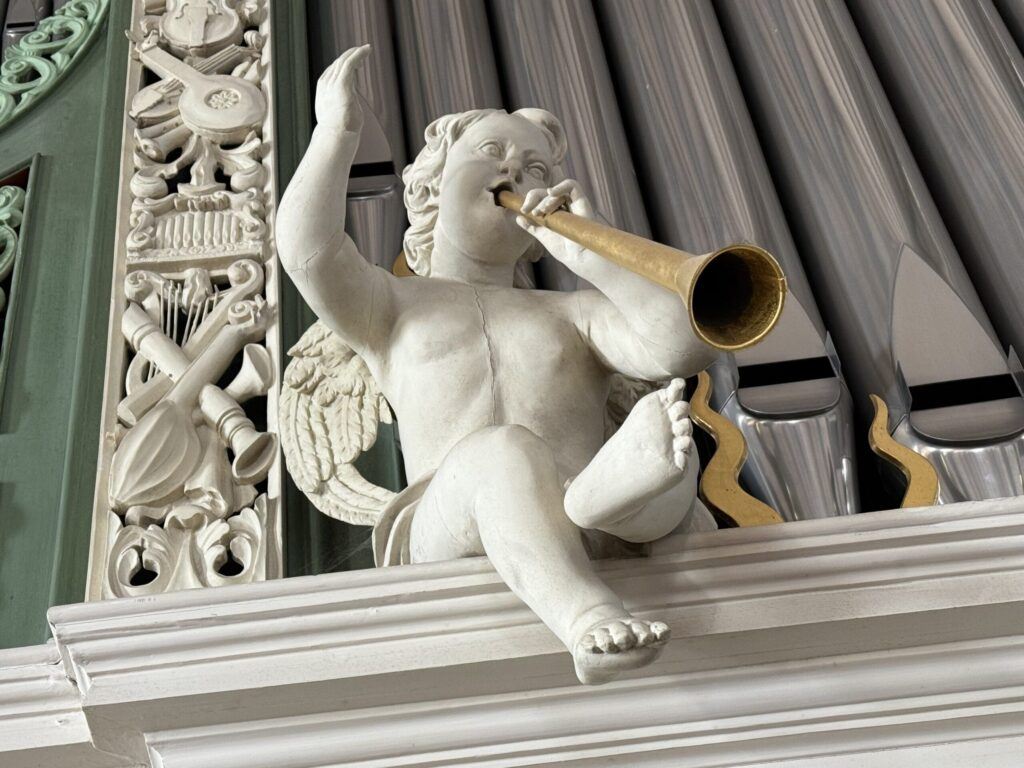
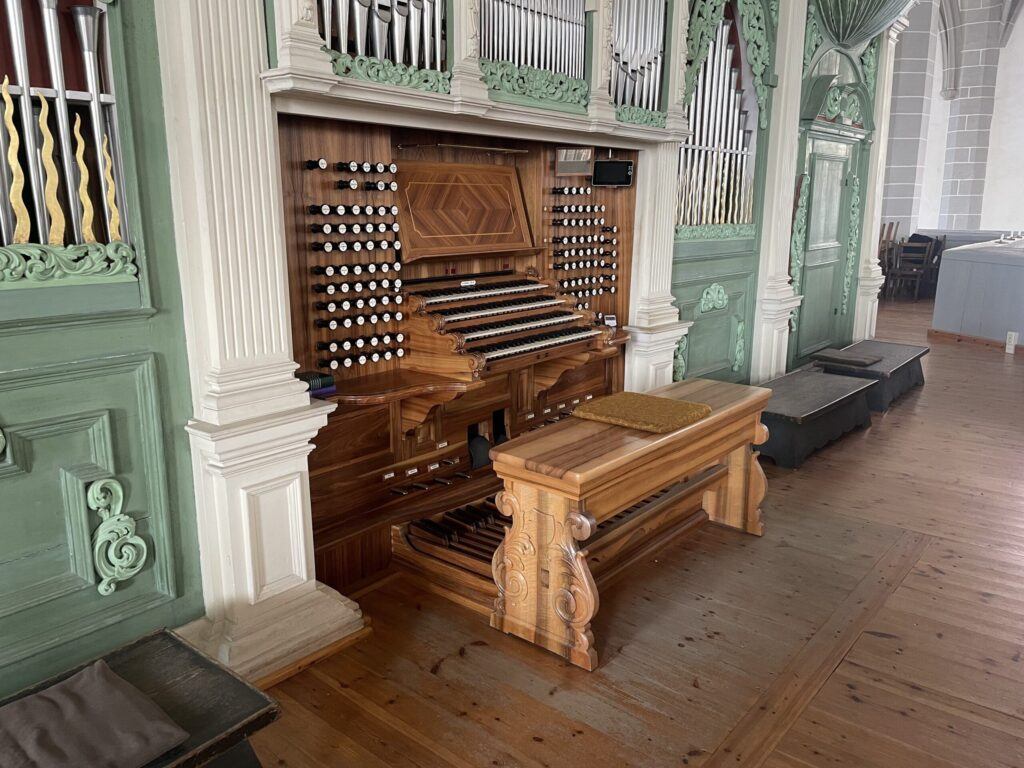
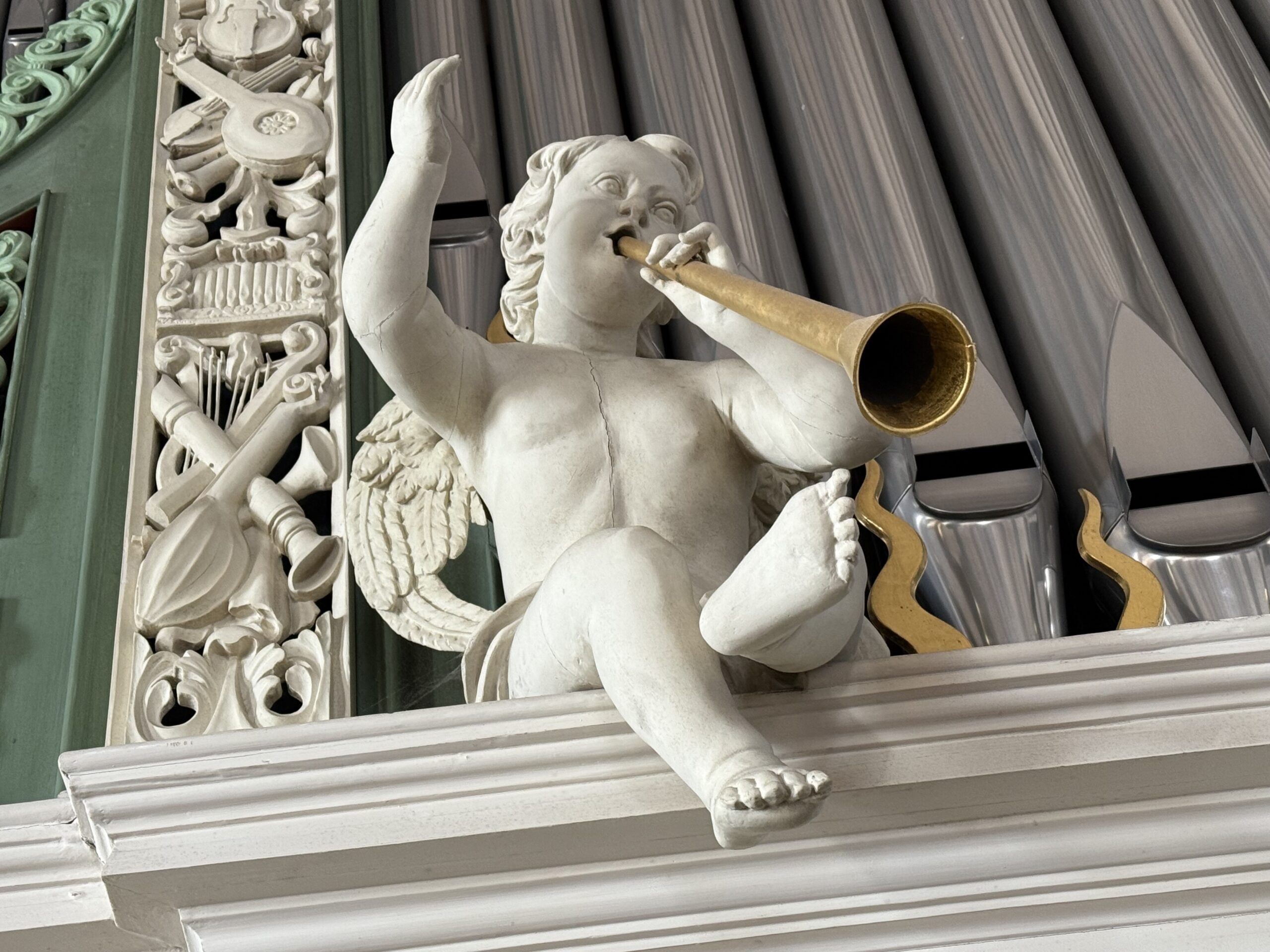
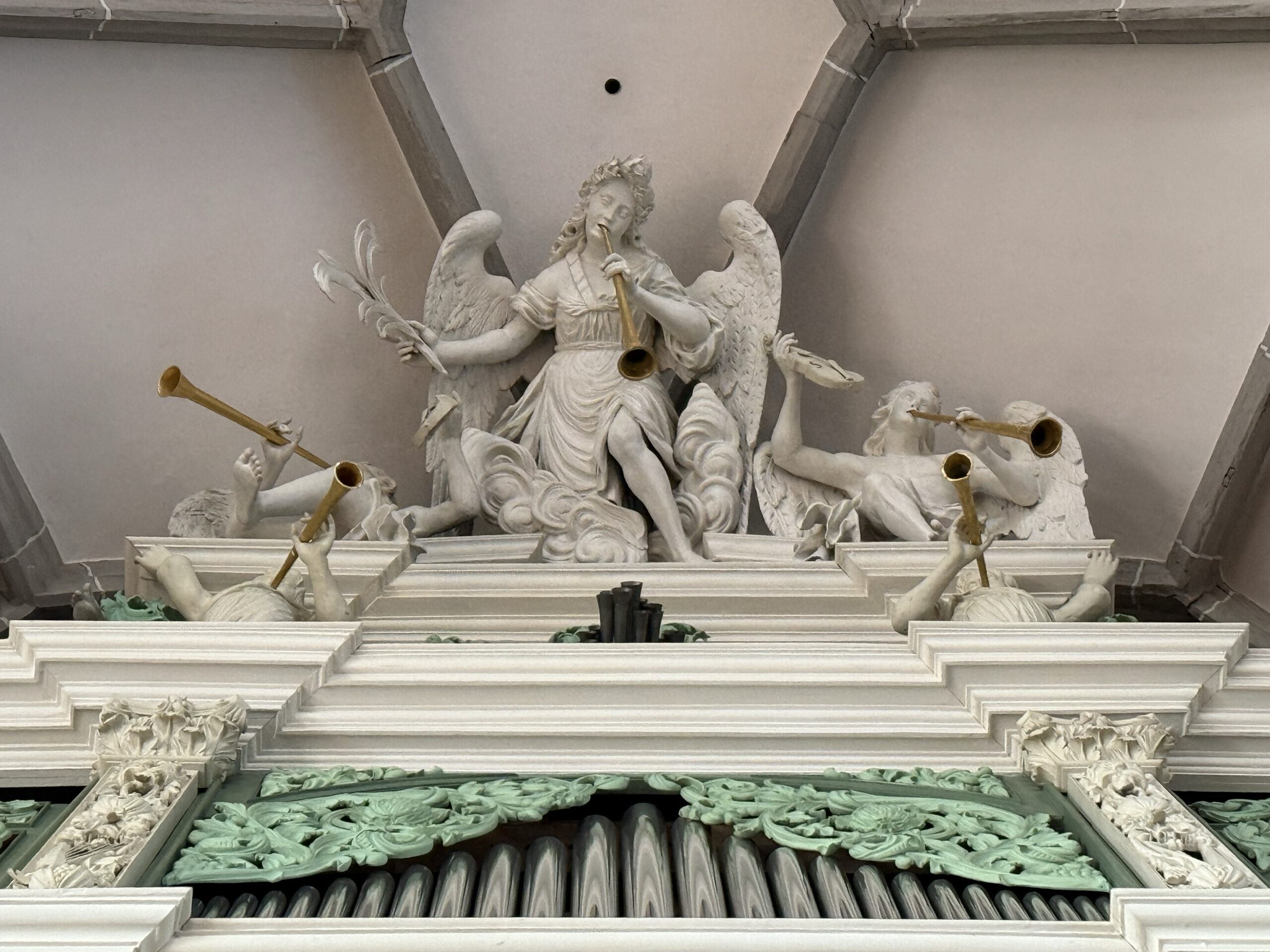
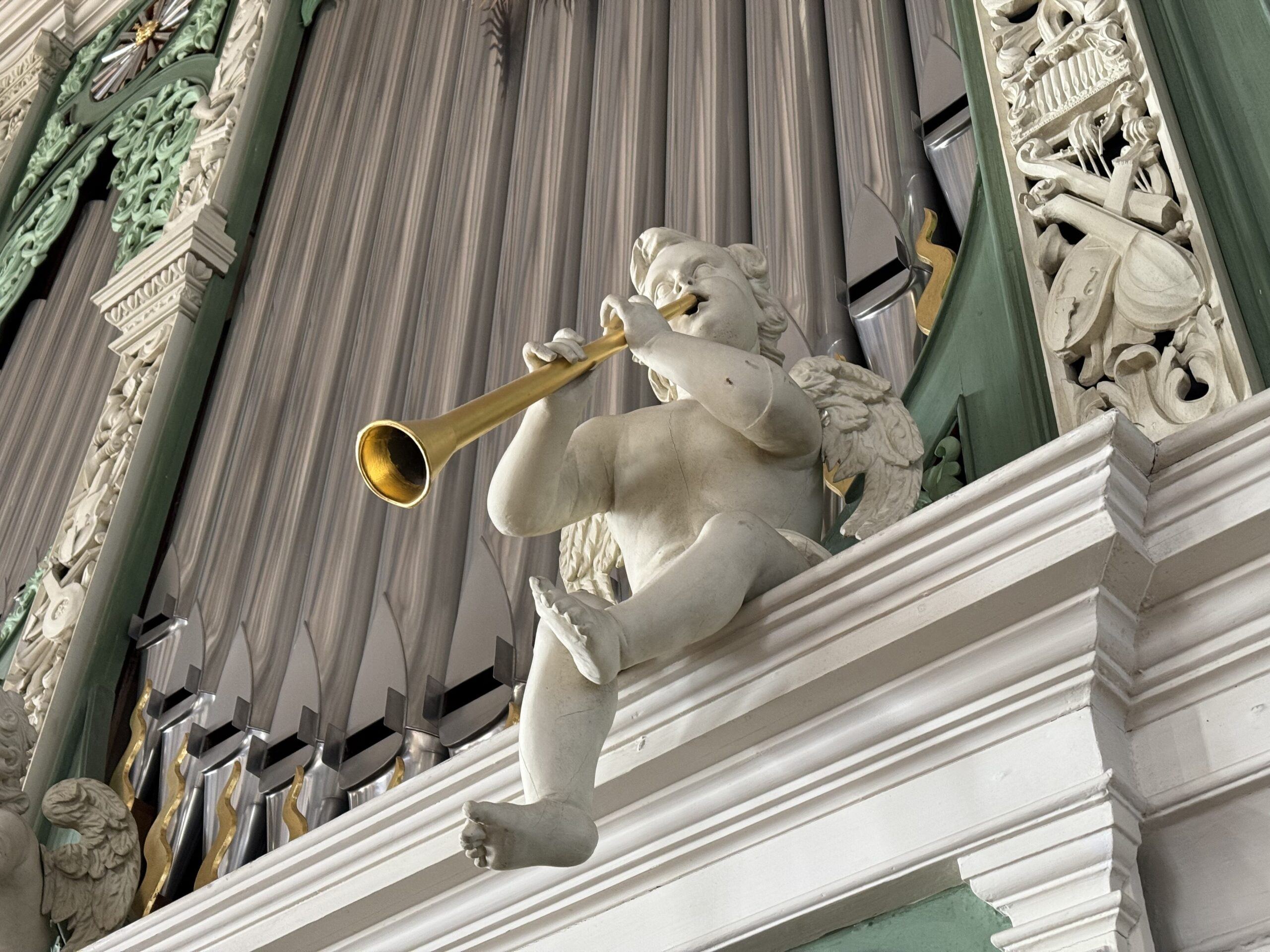
The new instrument was inaugurated in 1997 after the first construction phase, featuring 64 stops over three manuals and pedal. In 2002, the Sonnen Mixtur pipes were restored by Mathis. During the second phase in 2004, a swell division with 23 stops was added. In 2021, the pedal was extended by three additional stops. In 2024, the organ was further expanded with a Chamade division featuring six horizontal reed stops (“Engelwerk”), donated by Matthias Eisenberg. The inauguration took place at Pentecost 2024. Since then, the organ has a total of 96 stops.
Notes:
The Sonnen Mixtur and Engelwerk have been deliberately excluded from the Sweelinq sampleset at the request of the church.
The Sonnen organ is equipped with a General Crescendo. This functionality will become available in the sampleset after the launch of Sweelinq 3.
Bron: https://de.wikipedia.org/wiki/Sonnenorgel
Hauptwerk (C-a”’)
- Principal 16′
- Groß-Octava 8′
- Viol di Gamba 8′
- Hohl-Flöt 8′
- Rohr-Flöt 8′
- Fiffaro 8′
- Rohr-Flöt-Qvint 6′
- Octava 4′
- Spitz-Flöt 4′
- Salicet 4′
- Qvinta 3′
- Super-Octava 2′
- Mixtur IV 2′
- Cymbel III 1 1⁄3′
- Cornet V
- Bombart 16′
- Trompet 8′
- Clarin 4′
- II/I
- III/I
- III 16'/I
- IV/I
Oberwerk (C-a”’)
- Qvintadena 16′
- Principal 8′
- Grob-Gedackt 8′
- Qvintadena 8′
- Onda maris 8′
- Octava 4′
- Rohr-Flöt 4′
- Zynk II 2 2⁄3′
- Sedecima 2′
- Glöcklein-Thon 2′
- Vigesima nona 1 1⁄3′
- Scharff Cymbel III
- Cornetti III
- Trompet 8′
- Krumb-Horn 8′
- Schalmey 4′
- Tremulant
- III/II
- III 16'/II
Schwellwerk (C-a”’)
- Bordun 16′
- Viola pomposa 16′
- Diapason 8′
- Doppel-Flöt 8′
- Bordun 8′
- Salicional 8′
- Gamba 8′
- Vox coelestis (ab c0) 8′
- Principal 4′
- Travers-Flöt 4′
- Viola d’amore 4′
- Spitz-Flöt 3′
- Schweitzer-Pfeiff 2′
- Violine 2′
- Piccolo 1′
- Mixtur V
- Harmonia aeth. III
- Bombarde 16′
- Trompette harm. 8′
- Hautbois 8′
- Voix humaine 8′
- Clarinette 8′
- Clairon 4′
- Tremulant
- III 16'/III
- IV/III
Brustwerk (C-a”’)
- Gedackt 8′
- Praestant 4′
- Gedackte Fleut doux 4′
- Nassat 3′
- Octava 2′
- Gemss-Horn 2′
- Qvint-Nassat 1 1⁄2′
- Tertia 1 1⁄2′
- Super-Sedecima 1′
- Scharff-Mixtur III
- Hobois 8′
- Tremulant
Engelwerk (C-a”’)
- Trompeta magna D 16′
- Trompeta de bat. B/D 8′
- Clarin claro D 8′
- Bajoncillo B/D 4′
- Chirimia D 2′
- Orlos 8′
- EW/I
- EW/II
- EW/III
- EW/P
Pedal (C-f’)
- Groß Eisenberg (Akustisch) 64′
- Groß-Principal-Bass 32′
- Unter-Satz 32′
- Principal-Bass 16′
- Contra-Bass 16′
- Sub-Bass 16′
- Basso Dolcissimo 16′
- Groß-Qvinten-Bass 12′
- Octav-Bass 8′
- Gemss-Horn-Bass 8′
- Jubal-Flöt 8′
- Super-Octav-Bass 4′
- Jubal-Flöt 4′
- Bauer-Flöt 2′
- Mixtur VI 2 2⁄3′
- Contra-Posaunen 32′
- Posaunen 16′
- Fagotti 16′
- Trompeten-Bass 8′
- Tromba 8′
- Clarinen-Bass 4′
- Vox Angelica 2′
- I/P
- II/P
- III/P
- III '4/P
- IV/P
Special stops
Cymbelstern, Nightingale, Birdsong, Tamburo 16′, Cuckoo, Sonnen Mixture (12-rank pedal stop combined with Tromba 8′).
Additional playing aids
Tutti, Cancel, Setzer system, Crescendo roller.